John Crowley Has Died

John Crowley, certainly one of my top ten favorite authors, has died. He was not a best-selling writer, though pretty well known among science fiction and fantasy fans. His most celebrated novels are “Little, Big,” and the four book “Aegypt” series. He also wrote film documentaries and taught creative writing at Yale. Of him the great critic, Harold Bloom said: “Crowley writes so magnificently that only a handful of living writers in English can equal him as a stylist, and most of them are poets…of novelists, only Philip Roth consistently writes on Crowley’s level.”

https://en.wikipedia.org/wiki/John_Crowley_(author)

Although my writing style is nothing like his (If only!), Crowley’s work has had a profound effect on my the way I approach writing a novel. The circumstances of my discovery of Crowley are almost as strange and uncanny as something from one of his stories.

In 1983 my my little family moved to Skagway Alaska, where I began building a log house. (See those images and comments elsewhere on this website.) My wife worked as a bartender and waitress, and I worked part time as a sort of carpenter/handyman. One day, while cleaning out a rental house I was doing some maintenance on, I found a box of cast away clothing, kitchen odds and ends, and paperback books left behind by one of the seasonal workers who came to Skagway every year to work in the tourist industry.

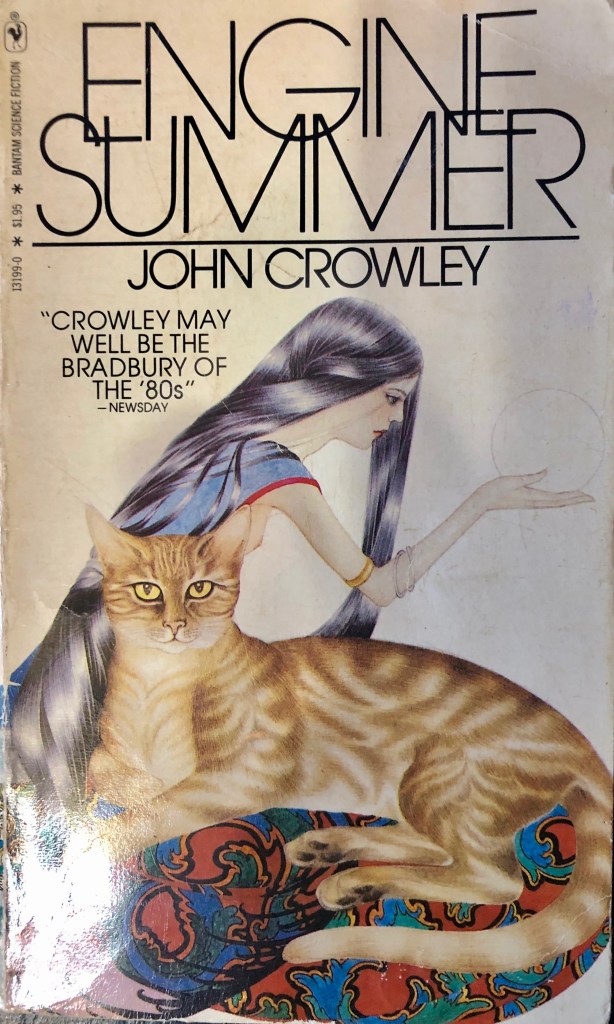
Normally I choose the books I want to read very deliberately, usually after reading reviews or getting suggestions from people with similar tastes in literature. I can’t recall ever before or since discovering a favorite author or book by chance alone. But something about the cover image and the intriguing title of “Engine Summer” made me pause and separate it from the rest of the things in that cardboard box. The name of the author also appealed to me. I had recently read two books by Aleister Crowley, and wondered if this John Crowley might be a relative. (In one of his blogs John Crowley assured his readers was not related, as far as he knew, and that Crowley is a fairly common English surname.)

I opened the book and read the writing on the inside of the cover. Immediately I wondered if this was a quote from the book, and if not, why was it there and who could have written it? (As you can see the name was scribbled out, as if the writer thought better of revealing his identity — see image below). I was hooked and began reading that same evening. Since then I have read the little novel dozens of times over the years. The book has some sort of strange hold on me, and each time I read it I discover something new. It is a melancholy tale, and profound on many levels.
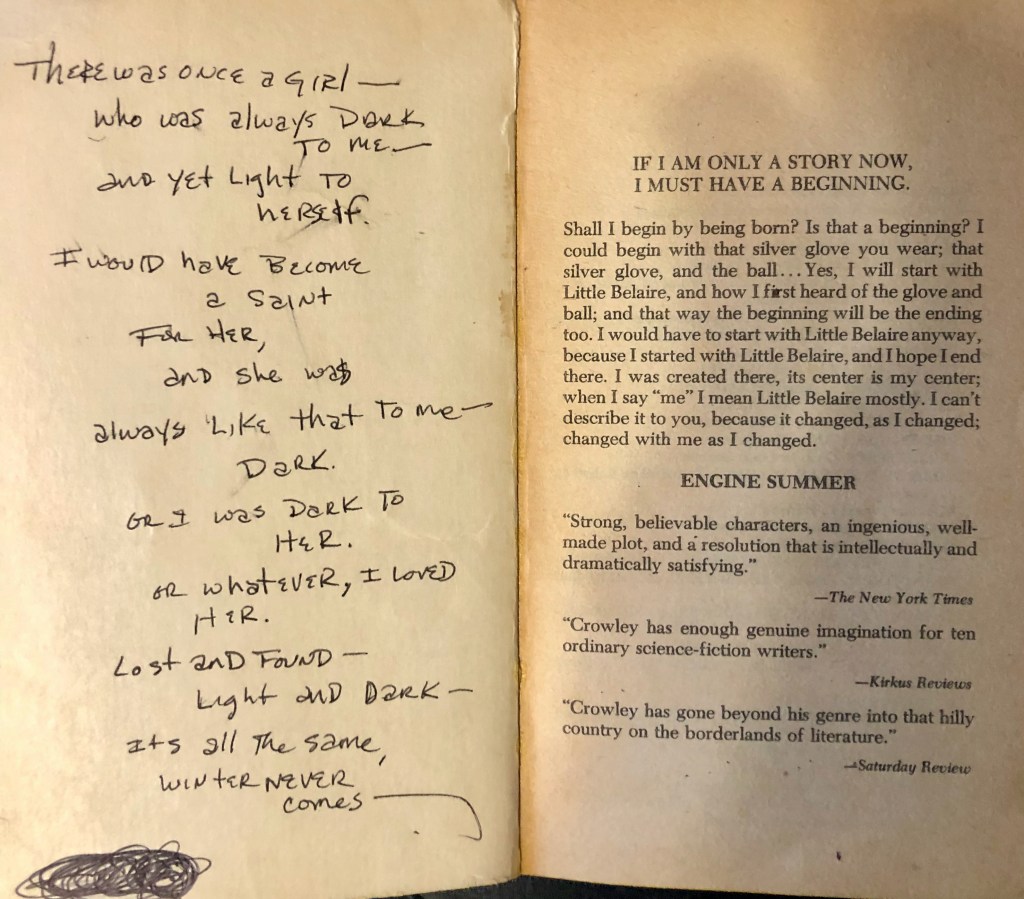
Since that summer of 1983 I’ve bought and given away many copies of Engine Summer, (including copies to all the actors and musicians in my musical, “Evermore”), but I’ve kept my treasured original Bantam 1980 edition. I’ve never found out who left that book behind, or wrote the words on the inside of the cover. I’ve also gone on to read most of Crowley’s other works. My favorites by him are “The Deep,” “Little, Big,” the “Aegypt” series, and several of his short stories.

In 2012 I got the idea of creating a musical based on Engine Summer. I extracted the basic love story, and my musical partner, Jim Nelson and I wrote songs for the play, which I entitled, “Evermore.” In 2013 the play was produced on two stages in Mt. Vernon and Bellingham, WA. (Images and commentary about Evermore are also elsewhere on this website.) I sent a link to a video of one of the performances to John Crowley. He remarked that he really enjoyed the music, but refrained from commenting on my bowdlerization of his novel.

Beyond the obvious inspiration for my play, Crowley has influenced me in other ways. He referred to “snakes-hands”— the parts of stories that don’t obviously advance the plot or character development—as some of the best parts of a tale. I agree, and to hell with critics or editors that say every word and sentence must serve the plot. I always include “snakes-hands” in my novels.

It is evident to me that Crowley knew the value of the role of the subconscious in good writing, and he admitted that some things in his novels seemed uncanny. I know what he is talking about. There are times when an idea will come to me seemingly “out of the blue,” or a character will simply not obey my desires. Sometimes, after days or weeks of no progress, I will wake knowing just exactly how a plot puzzle should be resolved. I never thought this way before reading Crowley’s works, particularly “Engine Summer,” “The Deep,” and “Little, Big.”

Certainly John Crowley was one of the great masters of the novel form, and deserves a much wider readership. But enough talk. If like me you love great writing, get a copy of one of Crowley’s novels or short story collections from your local bookstore or library. John Crowley has passed on, but fortunately for us most of his books are still in print and here for us to enjoy and marvel at. To paraphrase John from “Little, Big,” his fictional world gets bigger the further in you go.

“The world is older than it was. Even the weather isn’t as we remember it clearly once being; never lately does there come a summer day such as we remember, never clouds as white as that, never grass as odorous or shade as deep and full of promise as we remember they can be, as once upon a time they were.” (from Little, Big)
Deadheads In The High Desert

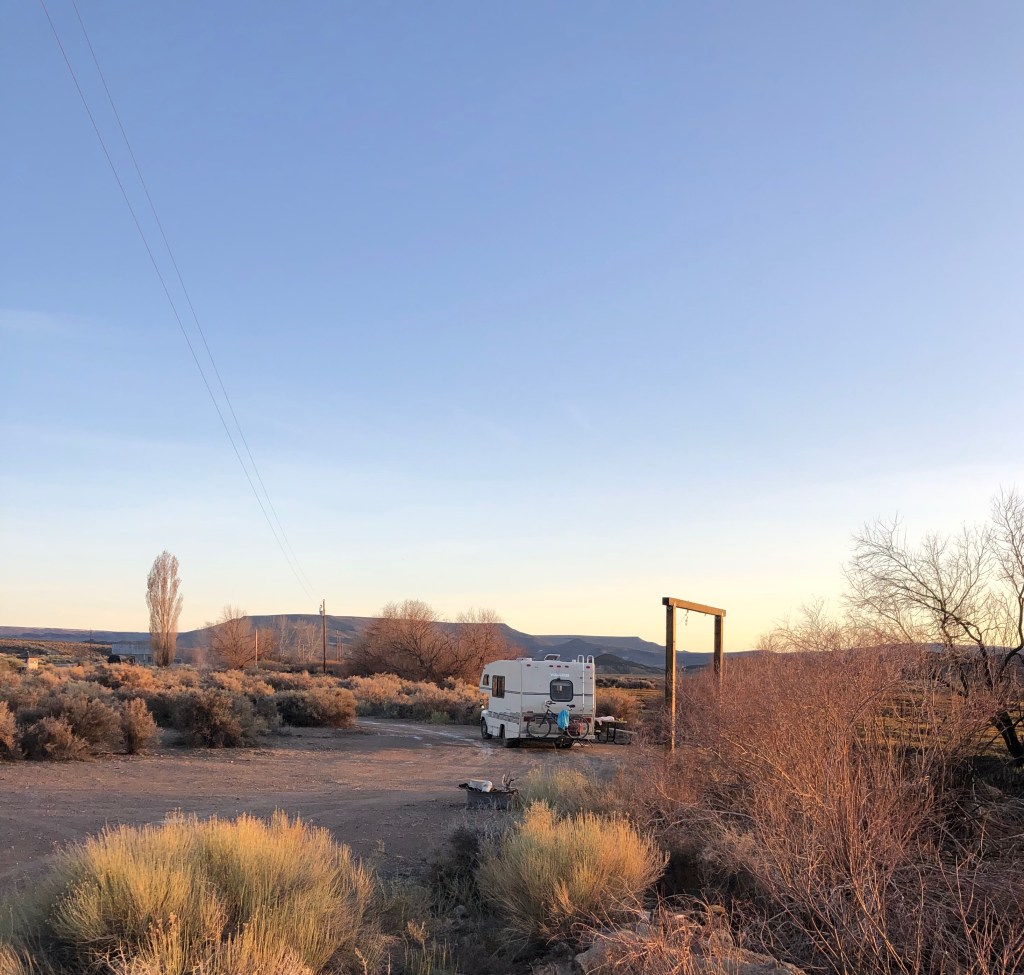
“Kermit” parked at a campsite in the Nevada outback.

While I was working towards my B.A. in Anthropology at the University of Oregon I had many opportunities to see the Grateful Dead. They played often in the area. The first Dead concert I attended was in 1968, when I was a high school senior. Although I never considered myself a “Deadhead,” their record albums were on regular rotation at the places I lived while in college, along with Miles Davis, John McLaughlin, Larry Coryell, Pink Floyd, and other popular rock and jazz bands of the era. I lived with musicians most of my years at the university, and our record collection was certainly more diverse and eclectic than most of our peers. I’ve never been in any bands that played their music, but I have always admired the Grateful Dead’s commitment and musical integrity.

When I travel the high deserts and Great Basin region I often encounter other campers and travelers who attended the U of O, or live in Eugene. I suppose the progressive, liberal culture of the university and Eugene has had a great effect on how I view the world, for I always feel an immediate connection to those people.

The recent death of Bob Weir reminds me of an encounter I had the summer of 2023 at a remote and undeveloped hot springs in Nevada. I drove up a long, dusty dirt road to the unmarked place. An old Volkswagen bus was the only other vehicle present. Dozens of Grateful Dead of stickers covered the entire back of the machine.

There were only two people in the hot springs, a couple my age or older. As manners and custom dictated I asked if I could join them, and they replied that there was plenty of room and I was welcome. The water was waist high, and the temperature perfect.

In the course of a rambling conversation about favorite hot springs and camping locations, Nevada history (my mother grew up in Nevada), music, and the sorry state of American politics, the man revealed that he had attended the U of O two of the same years I had been there. He told me he had gone to one of the Grateful Dead concerts, dropped out of college the next day, packed up his things, and began following the band. Eventually he got a job as a stage hand and sort of assistant bodyguard (he was a big man). He toured with the Dead for ten years, and he and his wife met at a Grateful Dead concert. Nearly fifty years later he was still married to the white-haired woman sitting next to him in the hot springs.

They went on to tell me their van used to be plastered with a variety of bumper stickers, mostly for progressive causes—women’s reproductive rights, anti-war, etc. But while traveling through some towns and rural areas MAGA cultists and other right-wingers, usually driving big Dodge Ram pickups or flatbed trucks would honk, flip them off, or even crowd them off the road. So they removed all the stickers except the Grateful Dead ones. After that they got smiles and high fives everywhere they went. It seems even the rednecks loved the Dead!

We were just three strangers meeting by chance in the middle of nowhere, lured by a mutual love of hot springs, and remote high desert camping, and finding an even deeper connection—another testament to the power of music to unite us. Long live the Dead!

Mantids In My Yard

Since moving to Birch Bay, WA ten years ago I’ve seen the European mantis (Mantis religiosa) on only two occasions. The first time was in 2021. While walking in an undeveloped area near my home I observed a female capture and eat a a large cross orb weaver spider. Her strike was lightening fast. She began by eating the legs, then consumed the body. See my video and photo below.

Both sightings were in August during a run of dry weather. I have seen these mantids several times east of the Cascade Range, where they are much more abundant. Once, at a service station in Bridgeport, WA there were hundreds of the insects covering the pumps, cars, building, and on the ground. It was impossible to avoid running over them. The pavement was slippery with their squashed bodies.

This is the first time I have observed them in our yard. My wife and I found two males the same day, one on the screen door of my studio, and another in a flower planter box. We captured them in a jar and carefully placed them in the garden. Perhaps they will eat a few pests, though they eat beneficial insects too. Larger females will sometimes even capture and consume hummingbirds.

Mantids are my favorite insects, along with dragonflies. My fascination with insects and spiders dates back to my early childhood. The first stories I created were fantasies of a world where I was the size of an insect. My friends and I fought epic battles using needles for swords, and we sailed the creeks and ponds in boats we fashioned from walnut shells. Here are some of my lyrics to “Without Compare,” a nostalgic psychedelic song I recorded a few years ago with Salvadore Dali Llama.

"Every lily pad a foreign shore,
Insect conquistadors explore.
We set sail in walnut shells,
With matchstick masts
And paper sails.


The branches of the trees held up the sky.
The ants, the bees, the birds, and dragonflies.
A world revealed is yours and mine to share.
A summer day without compare.
"

“Without Compare,” Salvadore Dali Llama. Vocals; Jim Nelson, Mike Rostron. Drums; Jon Grover. Bass; Doug Hyldahl. Guitars; Mike Rostron, Jim Nelson.

My Latest Road Trip

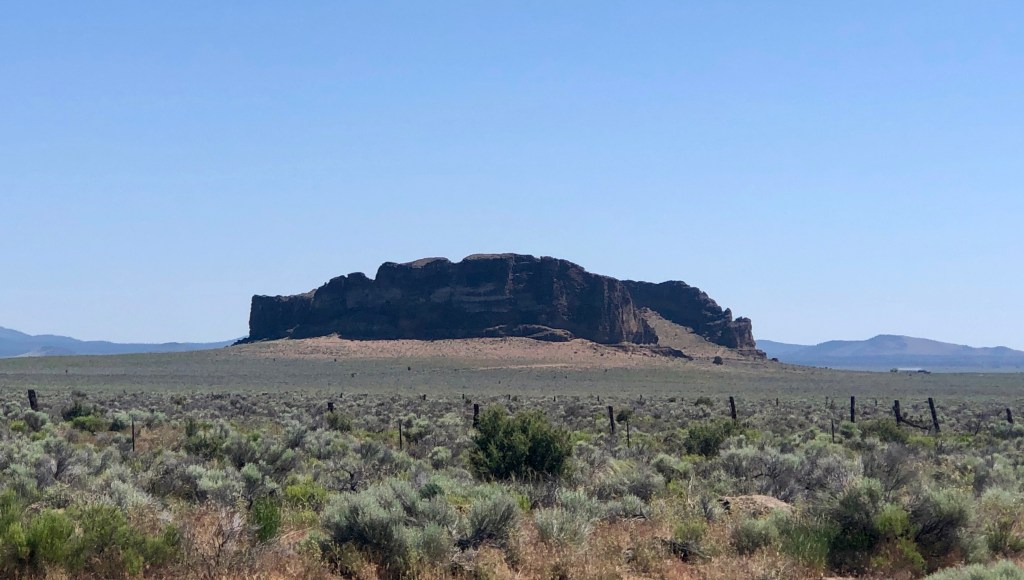
Fort Rock in southern Oregon, a favorite place with a fascinating geology and history.

I recently returned from more travels east of the Cascade Mountains, through eastern Washington, Oregon, and northern Nevada. My friend, Eric accompanied me in his camper.

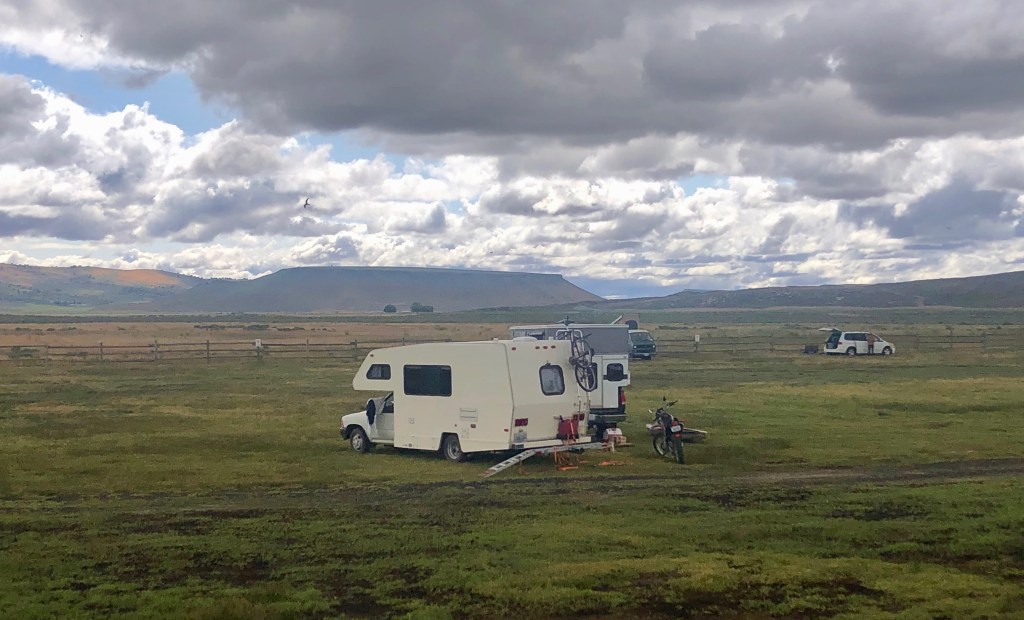
Our camp in the open field at Crane Hot Springs, Oregon.
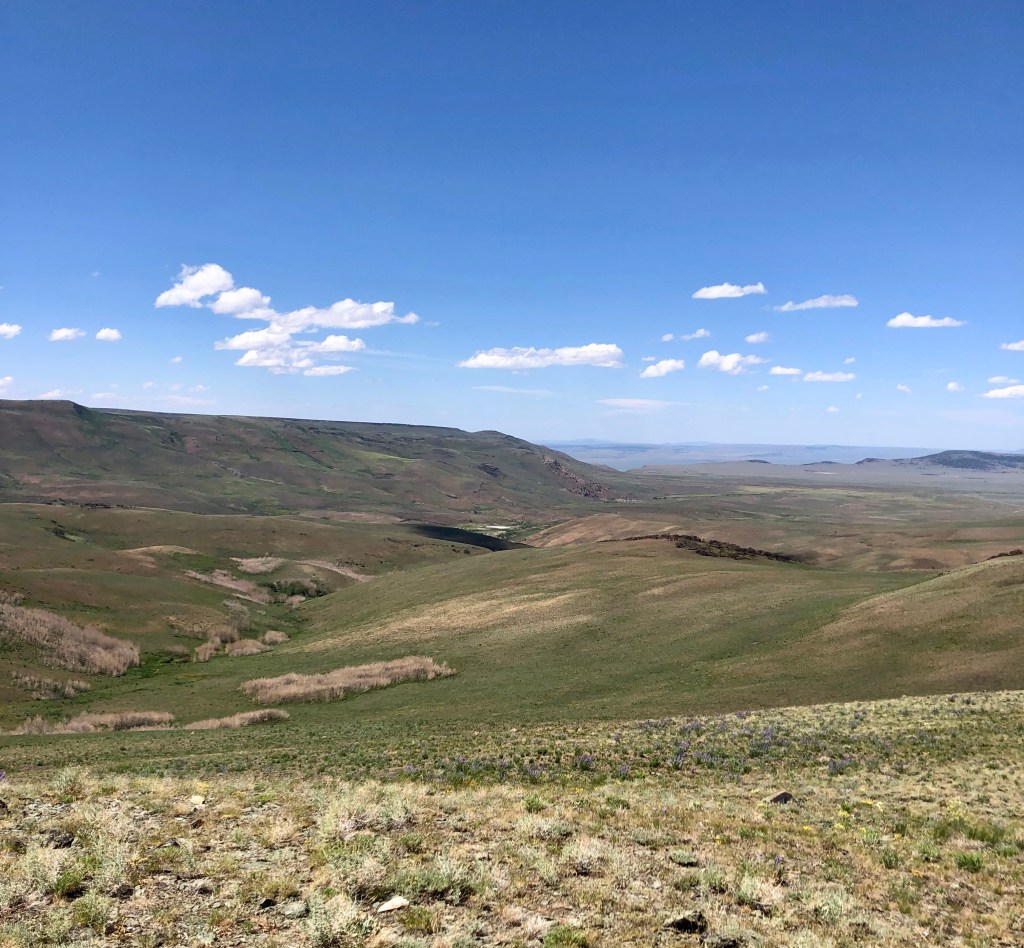
Hart Mountain National Antelope Refuge, Oregon.

I took along my dual sport Yamaha XT 250 motorcycle.

The Yamaha and “Kermit” (my 1990 Toyota minnie-winnie), both got a pretty good workout.
A back road in the antelope refuge.

Over the last several years of traveling the high deserts and Great Basin I’ve made some interesting observations.

Observation 1: Most small towns have better phone service than where I live.

I live in Birch Bay, WA, population about 12,000. The place has no post office, schools, or shopping centers. I have at most two bars on my cell phone at home. To make phone calls I must often walk up to the nearby golf course or the millionaire’s subdivision adjacent to ours, to get adequate service. I use Verizon, but the same was true with my previous service provider.

Below is just a partial list of towns in Eastern Oregon and Washington with a population under 600 I have visited in my travels, which have four or five bars service. I’ll leave you to draw your own conclusions about how progressive Whatcom County is with respect to communication infrastructure.

Adel, OR—pop. 40; Coulee City, WA—551; Dayville, OR—132; Crane, OR—116; Fossil, OR—447; Grass Valley, OR—167; Lexington, OR—216; Mansfield, WA—328; Maryhill, WA—46; Moro, OR—380; Paisley, OR—255; Spray, OR—138.

Virtually every community I have visited east of the Cascades in Washington and Oregon has better cell phone and internet service than the Birch Bay/Blaine region.

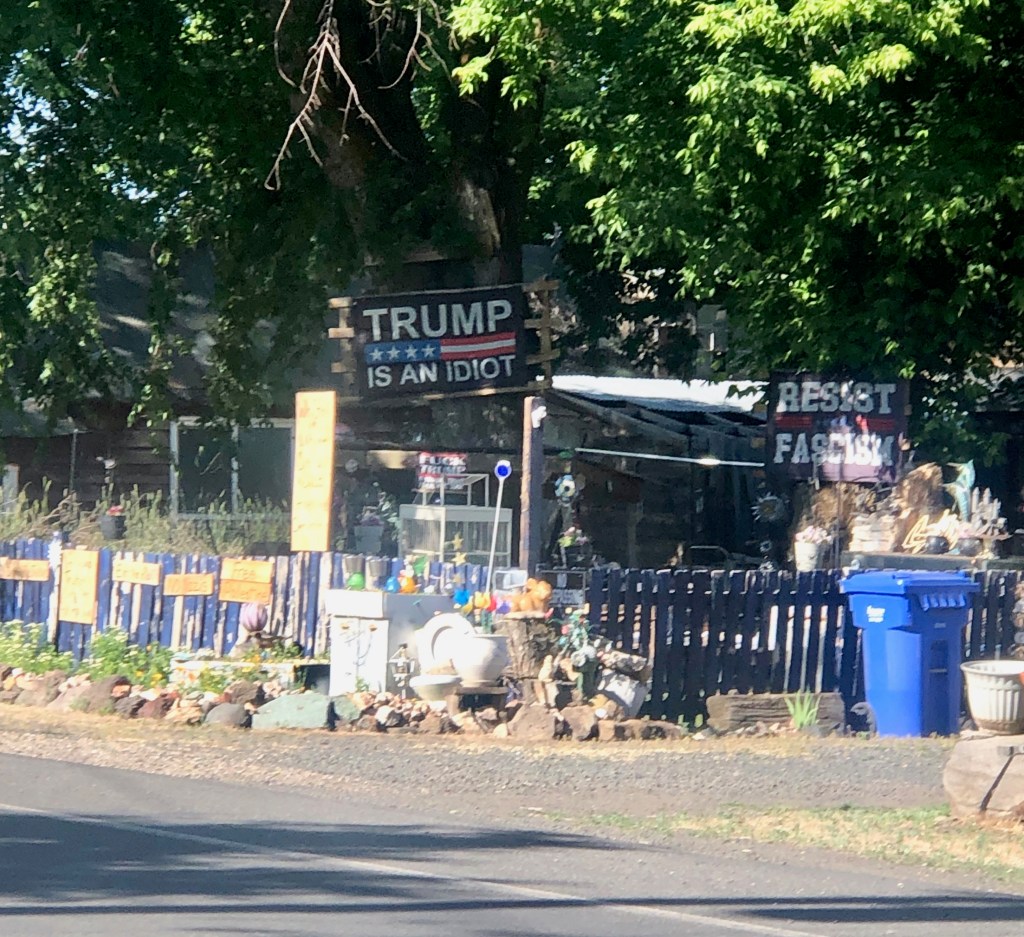
Signs in yard in Lakeview, Oregon.

Observation 2: It’s common knowledge that the majority of folks east of the Cascades tend to vote Republican, and many are Trump cultists. But there are many exceptions, and the true picture is more nuanced.

Bend and Pullman are obvious exceptions, but even in some of the smaller towns the majority do not vote Republican, or the voting is very close. Parts of Eastern Washington are more progressive than the I-5 corridor in some ways. You will see road signs in both Spanish and English in some regions of Eastern Washington, and many schools offer Spanish language courses. Here in the Blaine school district, supposedly progressive, Spanish is not even offered until high school—inexcusable!

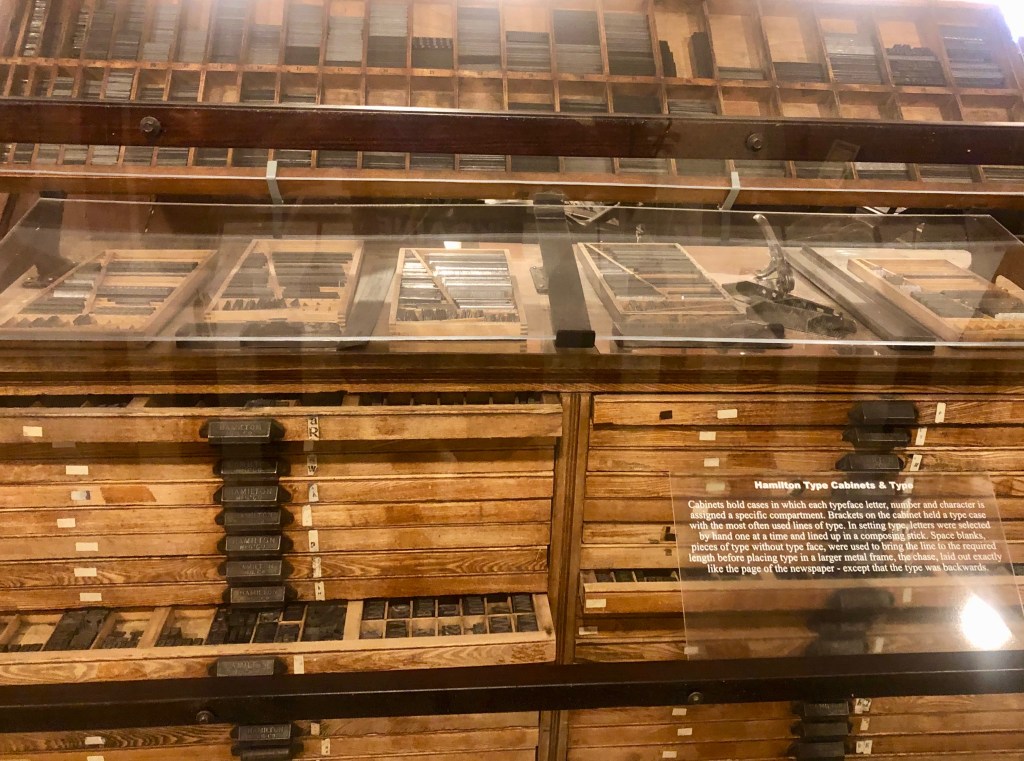
Movable type cabinets display, Moro, Oregon.

Observation 3: Many of the small towns have excellent museums that are well worth a stop.

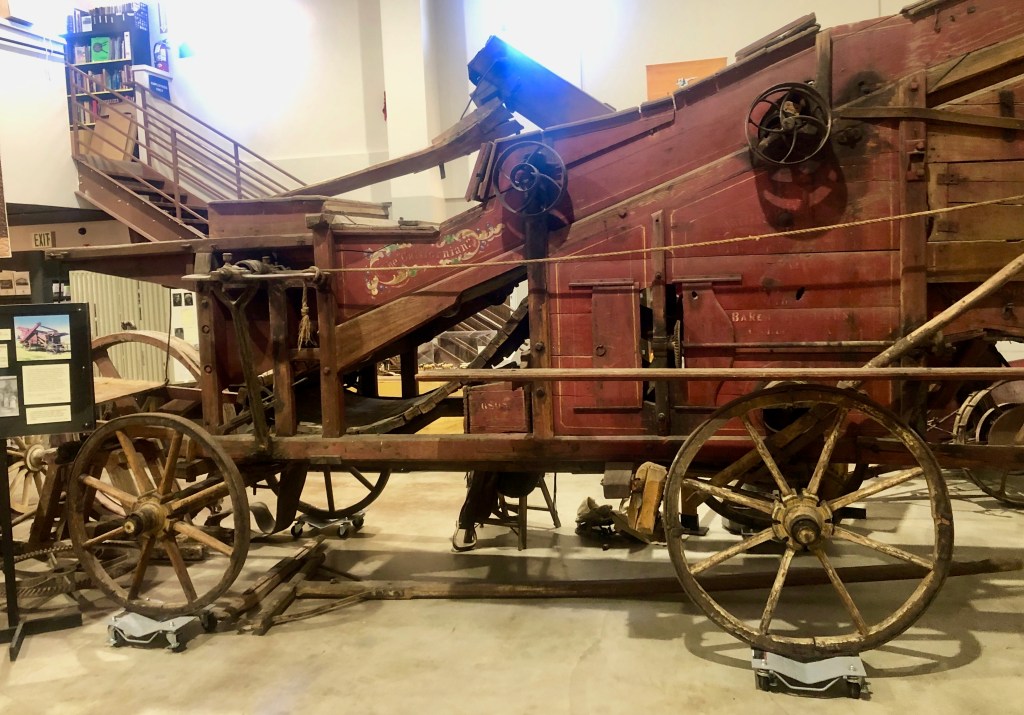
Old combine Moro, Oregon museum.

If you’re driving through Oregon on Highway 97 and have some spare time, check out the museum in Moro, just a few miles south of the Columbia River crossing. The old printing press display is world class. Many of the small towns have good museums with a wealth of information on their history.

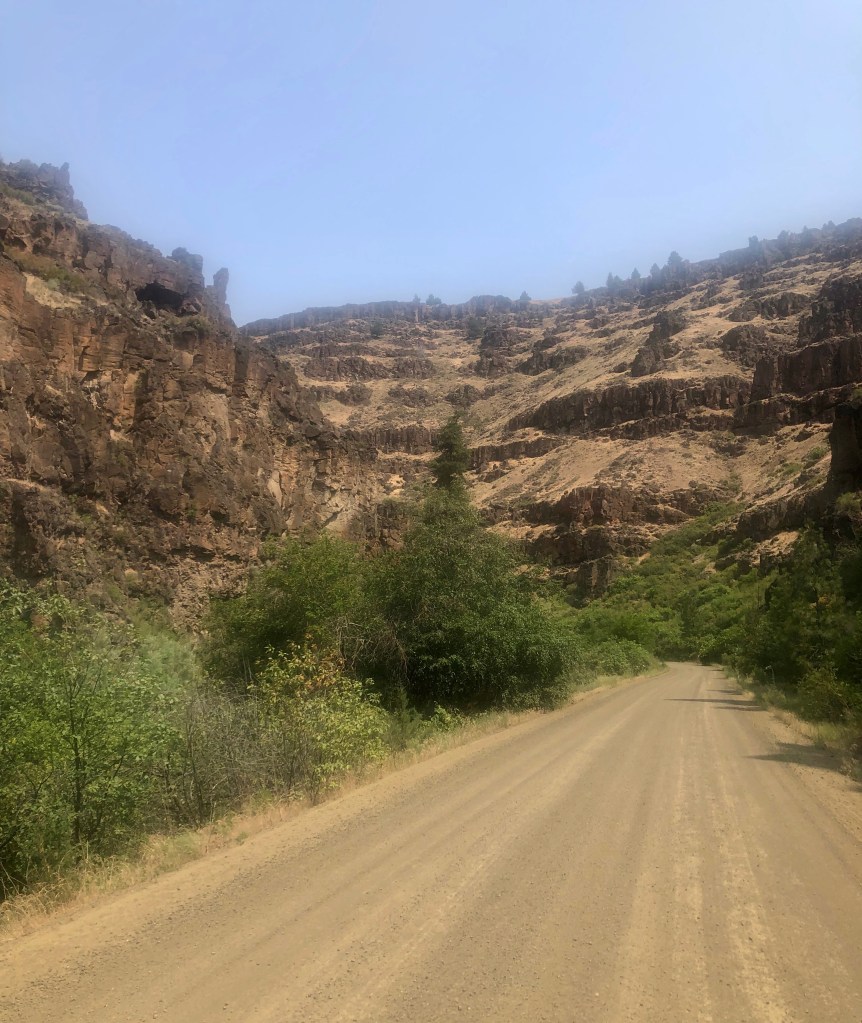
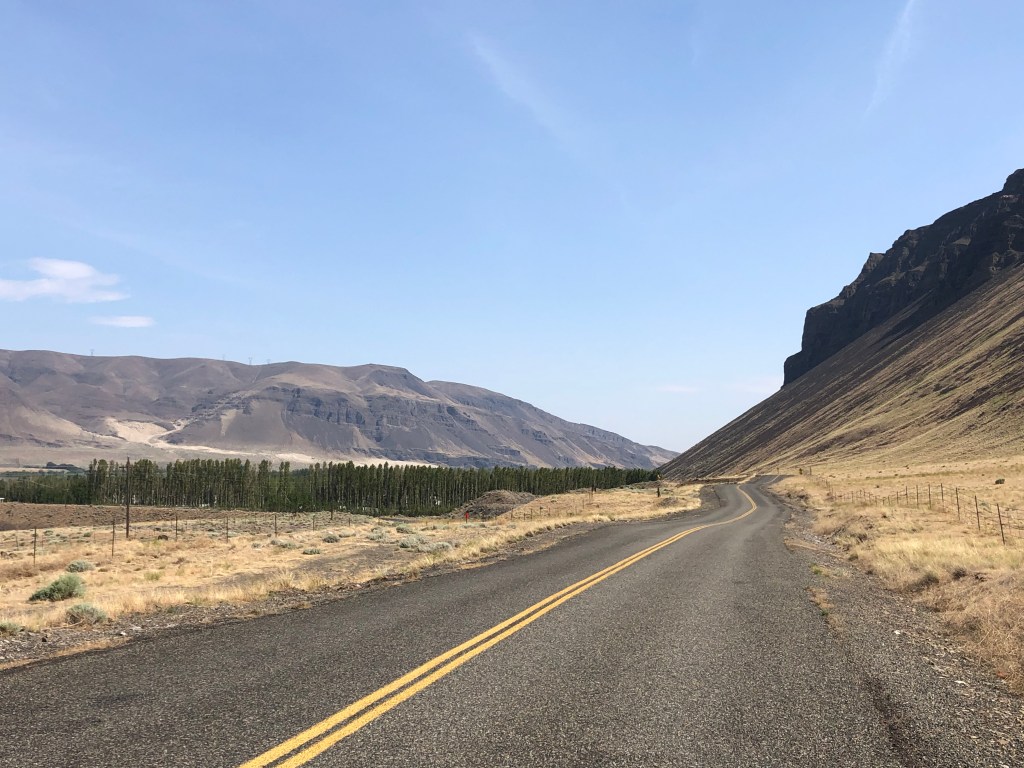
I almost always pass through John Day River country on my return trip. This time I followed the south fork of the John Day. It was slow driving along a mostly decent gravel road. Besides Eric, following at a good distance behind me to avoid my dust, I only encountered a couple of other vehicles on this section of the road.

Road following the South Fork of the John Day River, Oregon.

Once again we camped along the John Day before heading north to the traffic and congestion of Washington. It’s always hard to come back to the I-5 corridor after these adventures. So instead of immediately heading up I-90, the fastest route home, I spent a couple days in eastern Washington enjoying the mid 80s temperatures, before heading home via Highway 20.

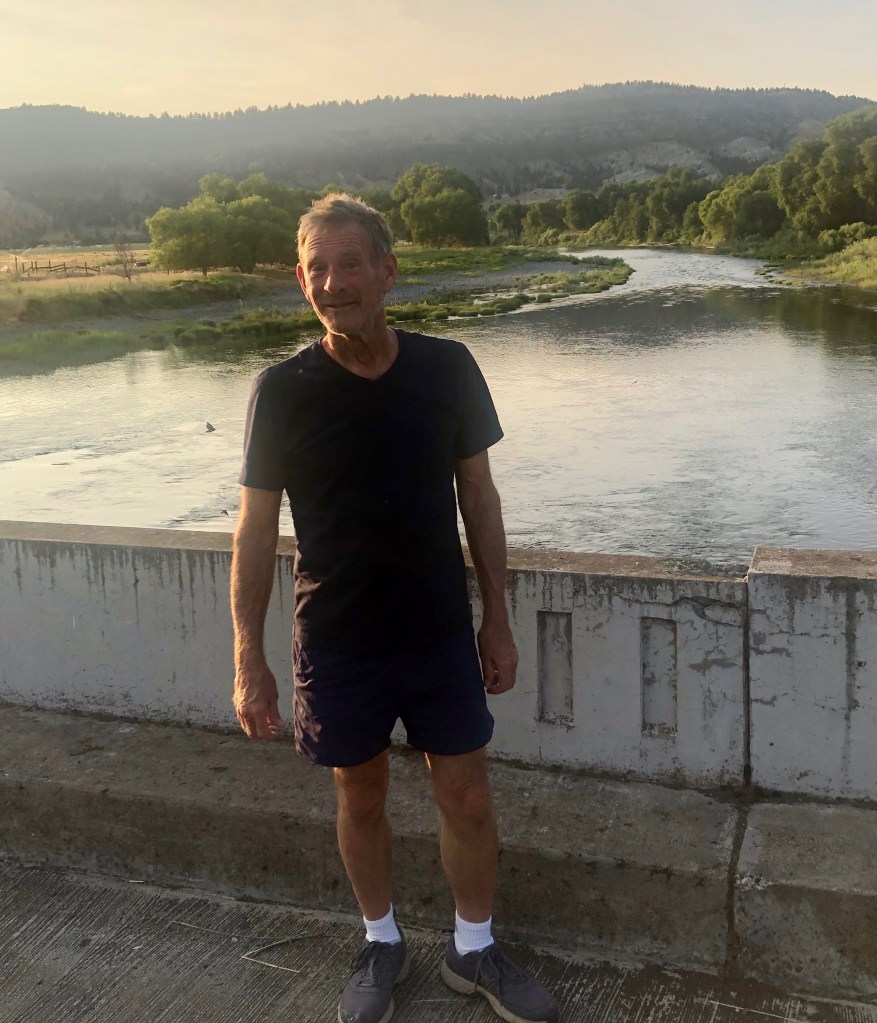
Standing on a bridge over the John Day River, Spray, Oregon.

While camping near Vantage, Washington, I took a motorcycle ride down the west side of the Columbia River, past the Wanapum Dam and the old railroad bridge (now part of the Palouse to Cascades State Park Trail, formerly the John Wayne Pioneer Trail), and through the imposing Sentinel Gap. There were no boats nearby on the river or people on the beach that warm Wednesday afternoon, so I cooled off with a skinny dip in the Columbia River.

South of Vantage. Orchards along Columba, and the Sentinel Gap ahead.
Wanapum Dam and I-90 bridge in the distance.
The old iron railroad bridge, now part of the Palouse to Cascades State Park Trail.
It was a nice place for a skinny dip!

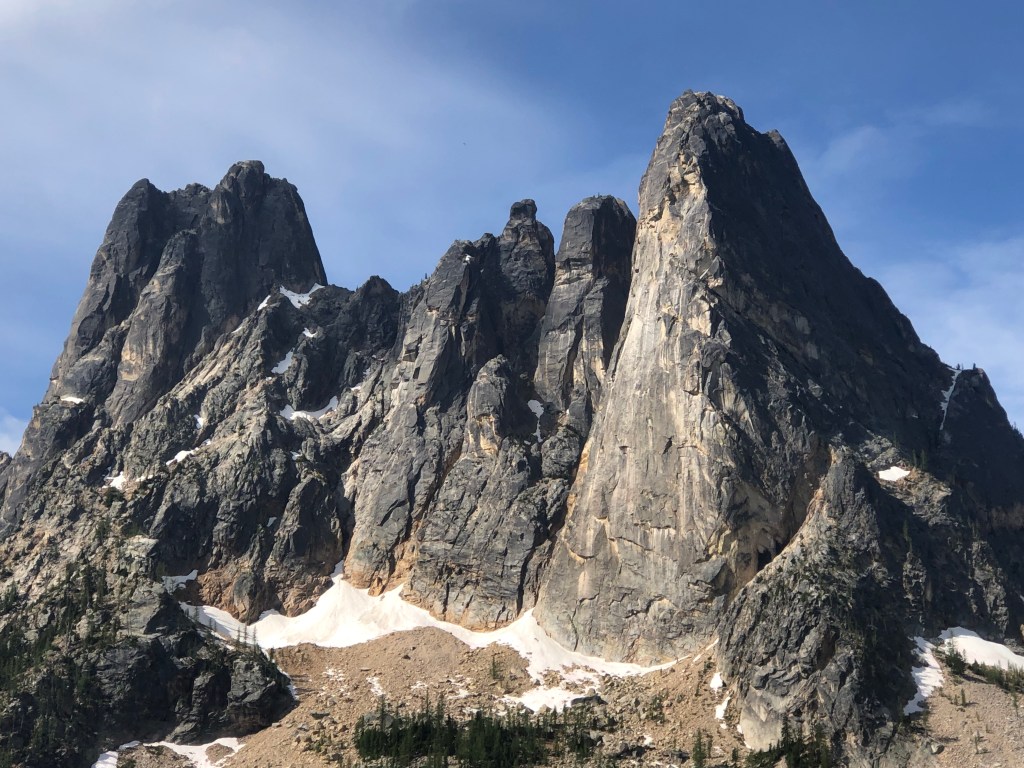
Liberty Bell and associated peaks at the top of the pass on Highway 20. Always a great stop.

My Article in May/June Latitudes & Attitudes

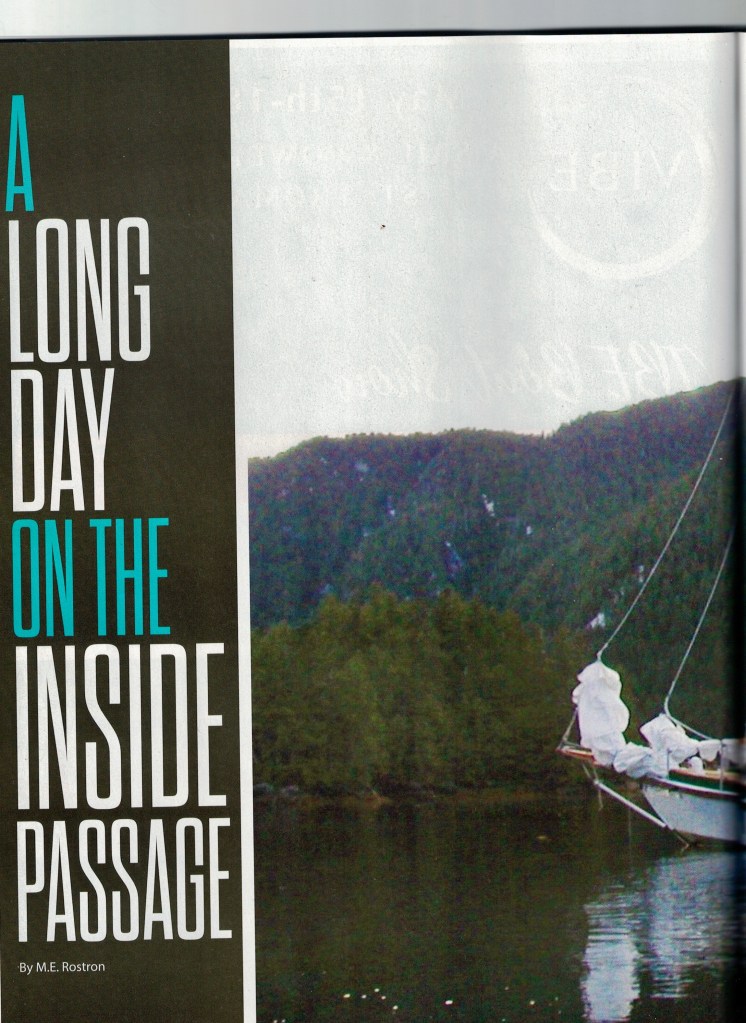
A Long Day On The Inside Passage
Feature article May/June Latitudes & Attitudes

My article, “A Long Day On The Inside Passage” has been published on page 82 in the May/June addition of Latitudes & Attitudes magazine, which is now out on the newsstands. The publication did a nice job with the layout, using photos I sent along with the article. They also included links to this website and my latest novel. These sorts of features don’t pay much, but the publicity is always welcome. Those who have read my 2019 novel, “Cape Decision” will recognize the inspiration for one of the incidents in that book. Latitudes & Attitudes is in its 27th year of publication, and the most popular print magazine for sailors, cruisers, and boaters. Their print version comes out six times a year. They also produce an online version.

You can read part of the article without a subscription here. https://latsatts.com/a-long-day-on-the-inside-passage/