High Desert Travels

Several times each year I head down to the Oregon and Nevada high desert regions for a break from the wet weather and the dense population on the west side of the Cascade range. I’ve spent most of my life west of the Cascades in Washington, Oregon, and Alaska, but I’ve grown to love the dryer weather, open vistas, darker night skies of the Great Basin region. I recently got back from my first trip of 2025.

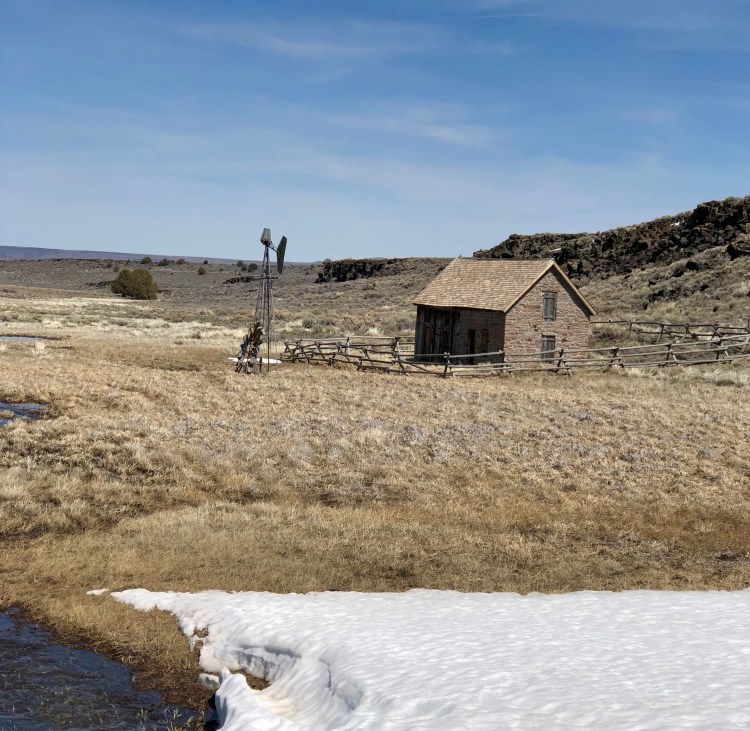
Last Chance Ranch, Sheldon National Wildlife Refuge
Chicken coop ruins at IXL ranch, Nevada.
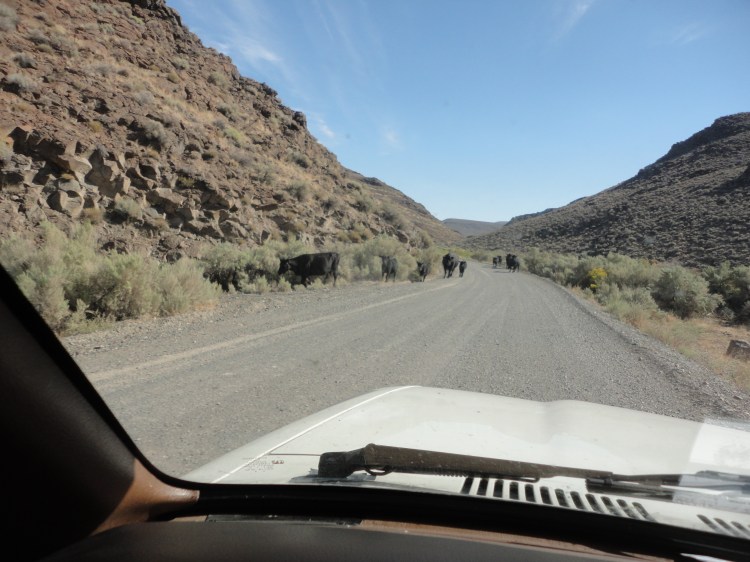
Cattle in the road, Whitehorse Ranch, Oregon.
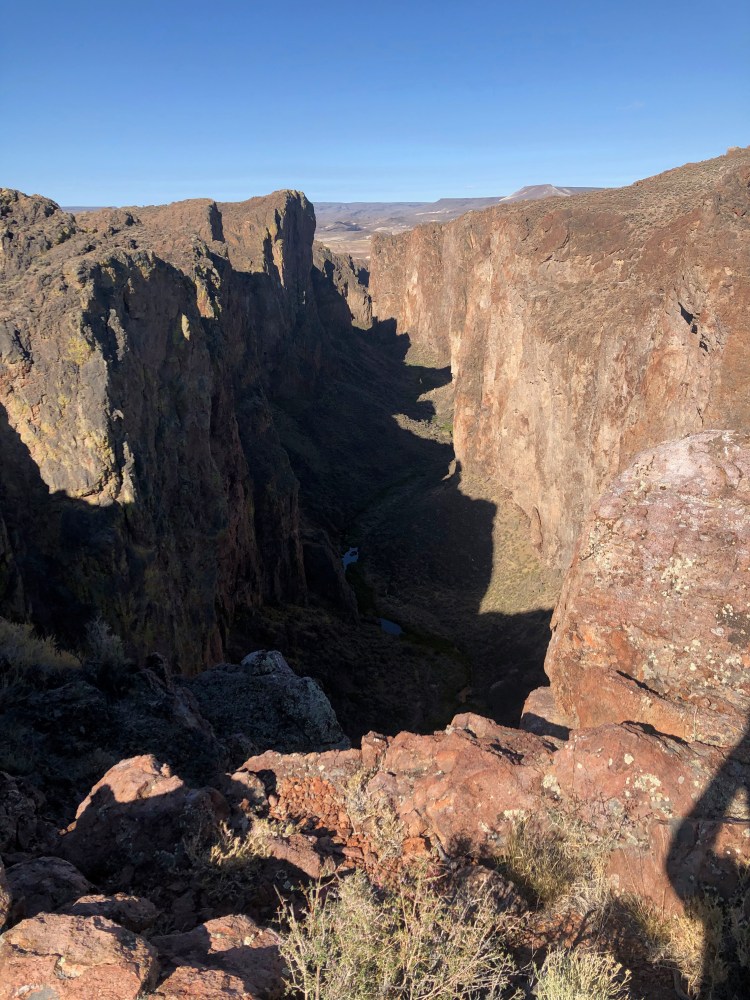
Gorge, Sheldon National Wildlife Refuge.

I travel in my 1990 Micro-Winnie with a couple of old friends or by myself, and occasionally with my family. The goal is to always to get off of the I-5 corridor as quickly as possible, where traffic is generally heavy, and it’s often rainy. I generally spend the first night somewhere along the Columbia River. This spring one of my favorite campgrounds is closed, due to Trump’s staff and budget cuts. A park ranger informed me she was not sure when or if they would open again this year.

My granddaughter above the Columbia River.

Our wisest and most statesman-like presidents set aside land for the use of the citizens, and to preserve the rapidly vanishing wild areas. The short-sided ones privatize those regions for corporate profit.

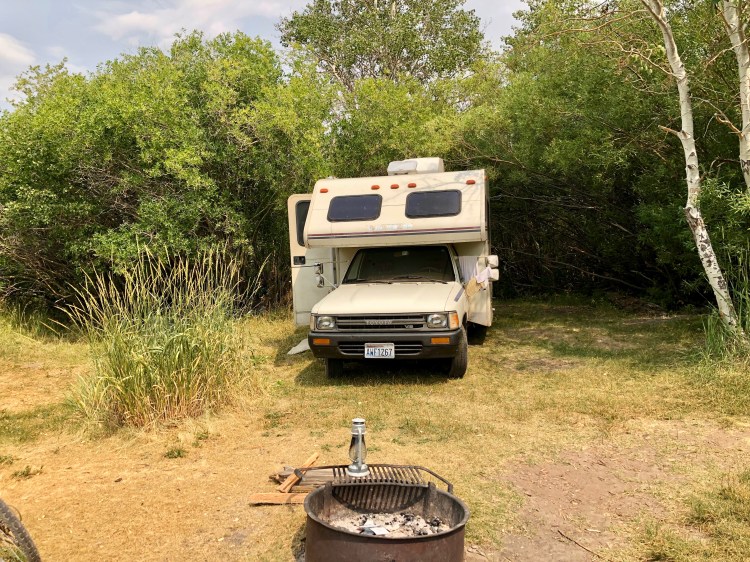
“Kermit” at campground in Hart Mt. Antelope Refuge

This year I’m taking along a dual sport motorcycle on some trips. I plan to get deeper into some of the places where “Kermit” shouldn’t go.

Yamaha loaded on “Kermit.”

Many people live their whole lives without ever seeing the Milky Way, or more than a few hundred stars. I’m fortunate to live a day’s drive away from some of the darkest night skies in the country, where the dome overhead is filled with the light from millions of stars. The sunrises and sunsets are nice too!

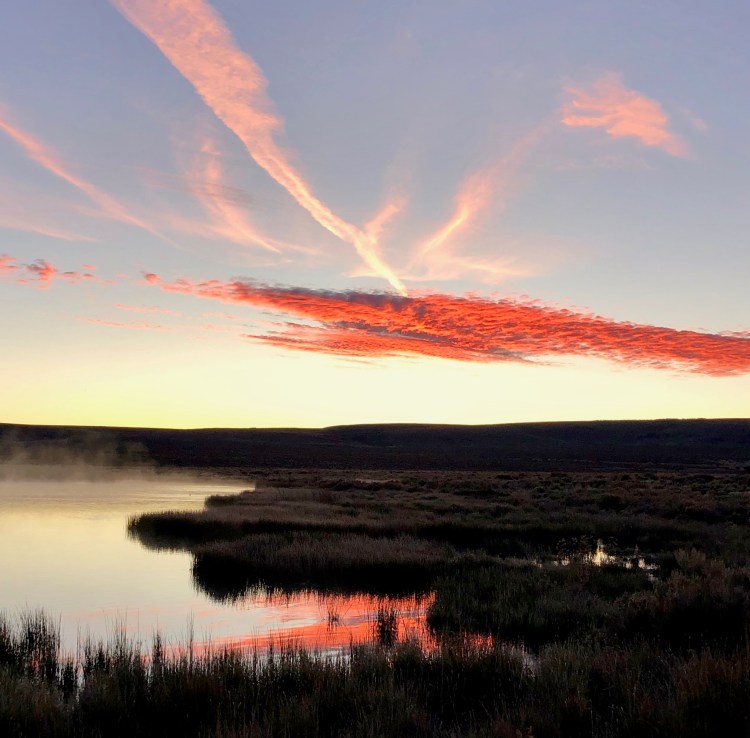
Sunrise in the Sheldon Wildlife Refuge.
ReplyForwardAdd reaction

But it’s not all camping in state and national parks, or on BLM land or other more remote locations. Now and then I stop into a local watering hole to have a drink with the locals, and other travelers. Who knows, maybe I’ll see you out there this summer!

Mike at unique bar above the John Day river.
An old bar in the Ruby Mts., Nevada

Americans Don’t Want Democracy


“Don’t follow leaders — watch the parking meters.” Bob Dylan

“… people like us (are gonna make it because) we don’t want freedom, we don’t want justice, we just want someone to love.”  Talking Heads

Americans have never had a real democracy, and most don’t want one. The nation was founded by a few wealthy white men. Women, Native Americans, and slaves could not vote. At first that privilege was limited to white male property owners. Later they extended the vote to all white male citizens, but even black men could legally vote years before women of any color.

Most of the founding fathers never intended to create a true democracy. They didn’t like paying taxes to the king of England. They wanted to create a government of checks and balances where no single member of their private, wealthy, land holding buddies could get too much power over the rest of them. They didn’t want a king or a dictator, but they also did not intend to enfranchise all citizens.

These days many Americans, perhaps even a majority, would seem to prefer a dictatorship or strong man form of government. A big percentage of our citizens idolize the wealthy. People (mostly white males) who happen to have inherited wealth, or have a talent for accumulating it are generally respected more than scientists, teachers, generals, artists, movie stars, or even sports heroes.

We know the above to be true because it would be so easy, especially with our modern communications technology, to make our government more democratic. Below is a list of of obvious changes which would accomplish that, but will probably never take place in this country.

1. Require all citizens 18 and over to vote. (Penalties  or fines for not voting, as in some more democratic countries.)

2. All voting by mail or online. (No old or infirm citizens waiting in lines in the cold at polling places, etc.)

3. Make federal and state election dates mandatory paid holidays (In an actual democracy voting would be a celebration, not a hardship.)

4. Abolish electoral college (One person, one vote.)

5. Establish strict limits on corporate and single donor election spending. 


That fact that these obvious changes are rarely discussed or even brought up in congress or the media, is an indication that the oligarchs don’t want everyone to vote, and much of the public doesn’t really want the responsibility of participating in a more democratic form of government.

73 Is Not The New 43! Lessons From My Great-grandfather

After the age of seventy death walks closely behind, scythe at the ready. Only a fool thinks otherwise. Everybody I know over about sixty-five has some sort of chronic health issue. We suffer from various aches and pains that seem to wax and wane with the weather, and most have hypertension, and soreness and stiffness from old injuries. Most conversations with people our age eventually devolve into “organ recitals” — a litany of our infirmities, impairments, surgical procedures, and pharmacopeia.

The actuarial tables don’t lie, and very few over the age of seventy are physically or mentally up to new challenges. Although more of us live longer, we’re not necessarily living healthier. Many are overweight, and most out of shape. Medical science keeps us out of the morgues a little longer, but human biology has not changed. The most reliable way to predict your life span, assuming you don’t slip on a banana peel and break your skull, or get in a car wreck, is to see how long your ancestors lived — a good reason to do some genealogy. 

It’s time to write my memoirs or autobiography if I’m going to do it. Why do that if you’re not famous? Not many readers are interested in the lives of the not-famous or infamous. But I think there are several good reasons, besides hubris, to leave a first person written account of your life, even if you don’t publish it. Aside from the value to future historians who may be researching our era, a firsthand record of your life is perhaps the most valuable thing you can leave your descendants, unless you are wealthy — then leave money and property! 

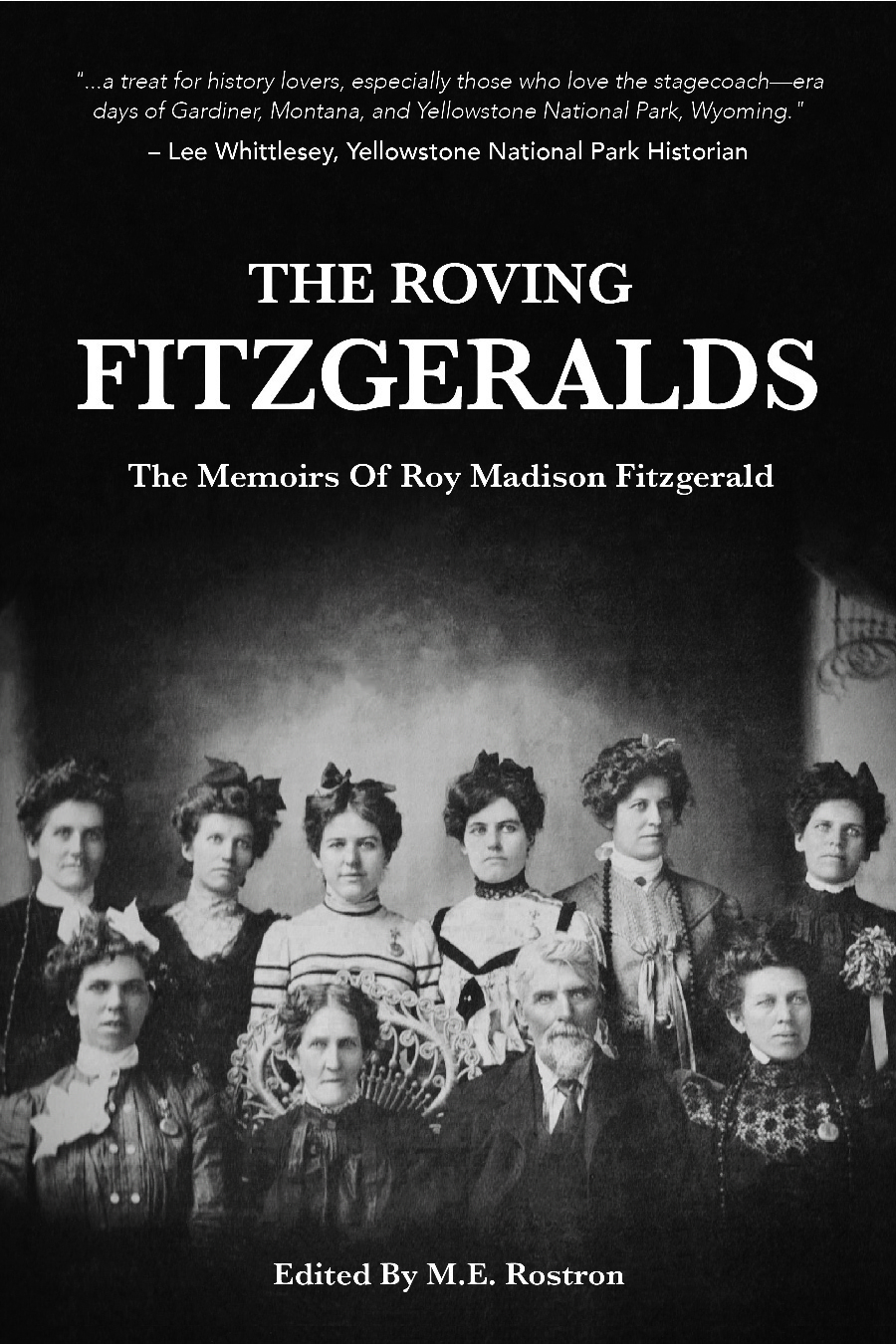
Rediscovering my great grandfather’s long lost writings was a remarkable event, and the year long editing and researching prior to publishing the book was fascinating. (“The Roving Fitzgeralds,” 2021.) The months I spent preparing the book for publication led me down many paths, intellectually and emotionally. I connected with my family history in ways I hadn’t before. I experienced a sense of what it was like to live in the era before all the mechanical and electronic gadgets we take for granted existed.

I wish more of my ancestors had written about their lives. It would be wonderful to have Selleck or Mary Fitzgeralds’s first hand notes on their wagon train trip from Iowa to California in 1862, and their subsequent travels by horse and wagon to Oregon and Montana. I wish Selleck’s grandparents would have left a first hand record, even a diary or journal, of their immigration from Ireland to Virginia in the 1740s. Alas, I know of no written records other than Roy Fitzgerald’s from either side of my family.

I’ve never been a fan of the sort of confessional or tell-all memoirs that often make the bestseller’s lists. I’m not very interested in Einstein’s sexuality or relations with women, but I am fascinated with his intellectual development, his breakthroughs in physics, his interactions with other scientists, politicians, and his ties to the Manhattan Project.

If I decide to write an autobiography or memoir, I’ll approach the project much as my grandfather, Roy Fitzgerald did. His intention was to relate the most notable incidents in his life, and to give the reader a sense of what it was like to be alive during those years, while imparting interesting information about the history of Yellowstone Park, Montana, Nevada, and Oregon, during an era when the the automobile was replacing the horse, and the phone, rails, and roads were connecting the West to the rest of the world. Considering that Roy dropped out of school after the eighth grade, he did a nice job of it. I would be happy to do as well.

Roy’s memoirs almost didn’t get written. He began writing when he was in his early eighties, and died at the age of eighty-seven. It was a near thing, as his health was failing, but he still managed to make several trips from Oregon to Montana to verify his memories of some of the events he recalled from his youth in Gardiner. He barely lived to finish his memoir, and did not live to see it published. 

I don’t want to make that same mistake, and it’s certainly not given that I will be mentally or physically capable of writing my memoirs or autobiography in the future. So I’d best be about it, and so should you if you’re over sixty-five, because seventy-three will never be the new forty-three!
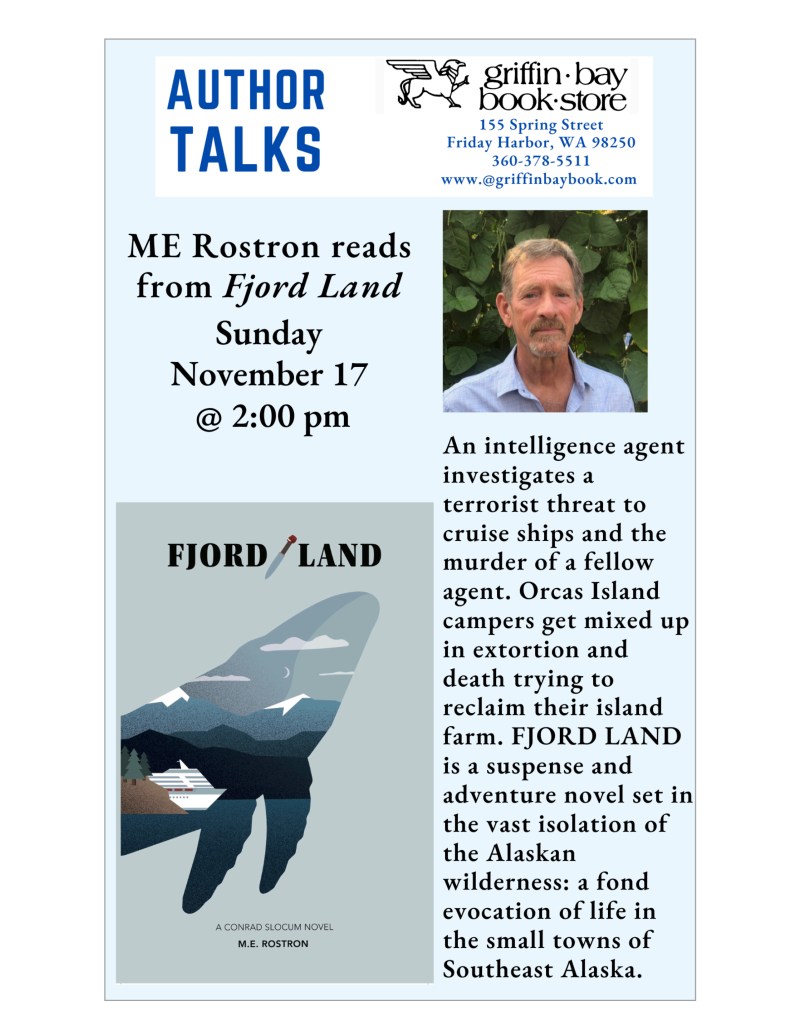
Friday Harbor, November 17

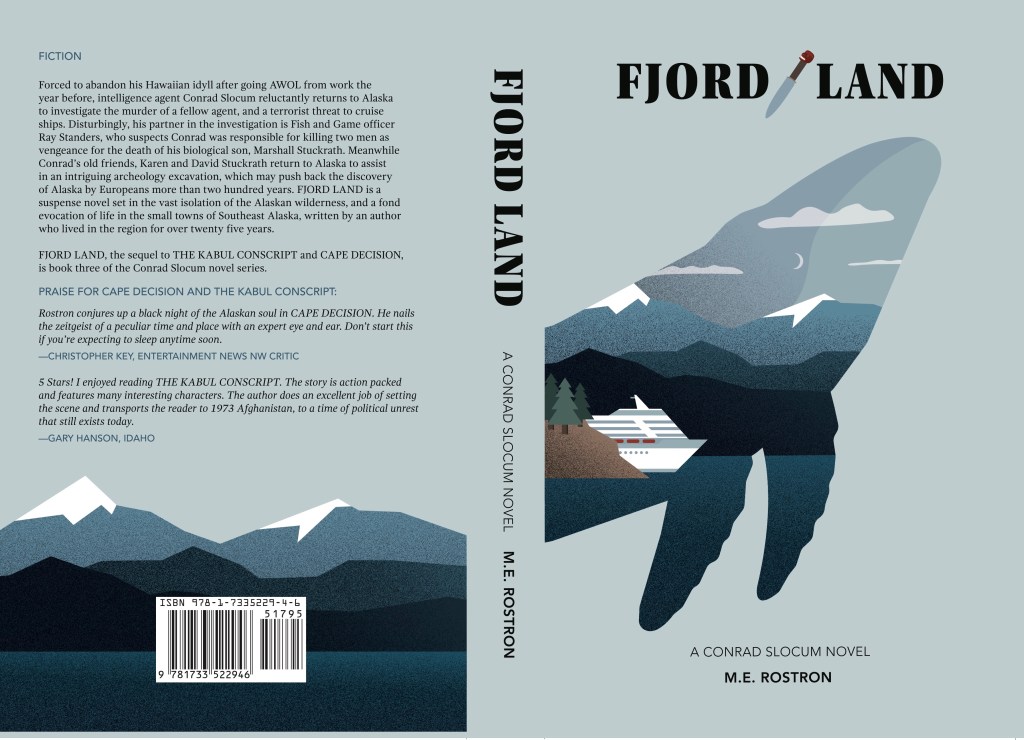
I’m looking forward to my third author event this fall. I like taking the ferry out to the San Juan Islands. This summer I was lucky enough to perform twice with Lemon Creek in the San Juans, but this time it will be a solo act, and certainly not as entertaining, or as danceable! I was also fortunate to have five actors read passages from Fjord Land and Cape Decision at my last author event in Bellingham, but I won’t be able to bring them to Friday Harbor. Although I will focus on my latest novel, Fjord Land, I’ll talk some about my other books too, and take questions about any of the books, my approach to writing, or related subjects.

If you have a favorite Northwest bookstore you think I should hold an author event in, tell the event manager or owner to contact me here, and I will be happy to follow up.