A Long Walk

I’ve always told my children “stupidity usually leads to pain,” or at least inconvenience. It seems we’re never too old to learn things the hard way.

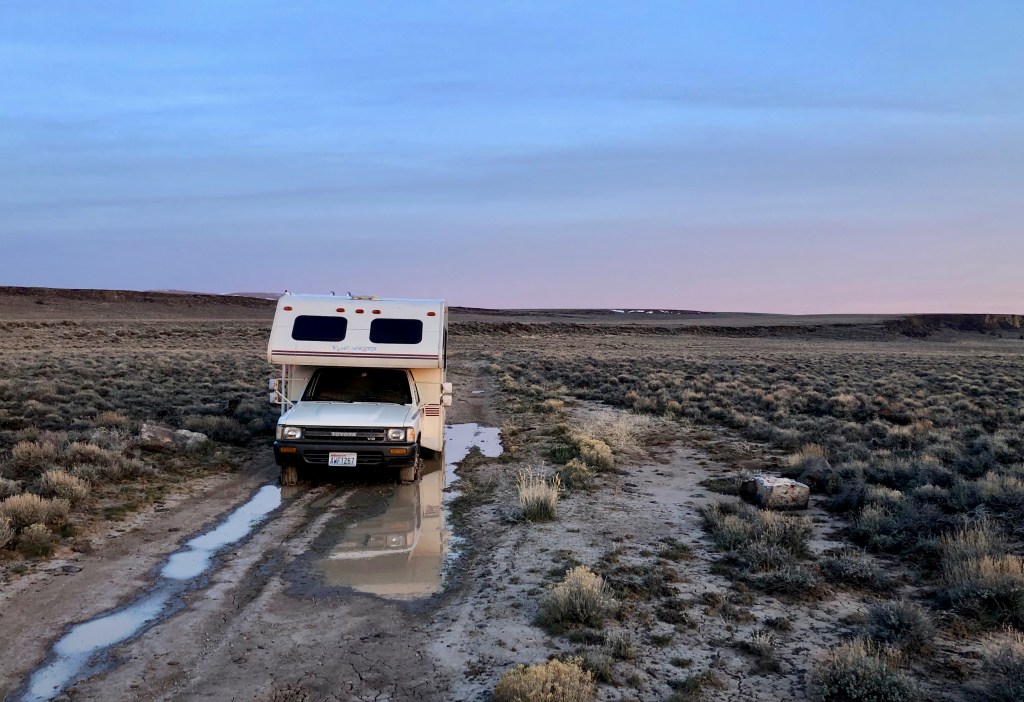
On my latest trip to the high deserts and basin & range region of Oregon and Nevada I chose a different route, which led me through some of the most isolated and starkly beautiful parts of the Sheldon Wildlife Refuge. For two days I didn’t see a single other vehicle or human. There are no towns anywhere in the region, and the night skies are some of darkest in North America. It was fabulous—except for a complication. I turned off the road to park and got “Kermit,” our 1990 Toyota “minnie-winnie” stuck.

With no cell service I had no choice but to walk the approximately 25 miles to the highway. I got up early and, after a pot of coffee and some calories to get me going, hit the road at about 6:30 AM. It was surprisingly warm. The mud puddles hadn’t frozen overnight. As I walked it turned into a perfect day, clear skies and mid-70s. I observed hawks, pronghorn antelope, and piles from the wild horses in the region. A couple of coyotes crossed the road—probably hoping the old man would soon collapse and they could be first at the feast. About half way my stroll I crested at 6700 ft. At least the altimeter application works even when there is no cell phone service.

I reached the highway about 1:00 PM (Not too bad for an older dude, I thought.), a bit sweaty, but otherwise no worse for wear. It seems the folks in the vehicles speeding by at the rate of approximately one every fifteen minutes regarded me as some sort of suspicious homeless creep. (In their defense I might not have stopped for myself either!) Finally an older couple in a newer pickup pulled up. I convinced them to drive me the forty miles to the ranger station. The head ranger told me he’d already been stuck three times this spring, and agreed he needed to check out the road for himself.

On the drive back I learned much about the region from the head ranger, who has been there 21 years. One cool fact: In the last 11 years they have removed over 350 miles of fencing, so now you can ride a horse or walk anywhere without encountering a fence, as it was before ranchers arrived in the 1880s. I learned that only two rangers work year round to manage this 550,000 acre refuge (though they hire some seasonal help). Imagine if this was privately managed. It would be dozens if not hundreds of workers, subcontractors, managers, etc. Don’t tell me private for-profit businesses can always do things cheaper and more efficiently than government. In fact, the refuge’s infrastructure owes its existence to the WPA and the FDR administration’s policies of the 1930s.

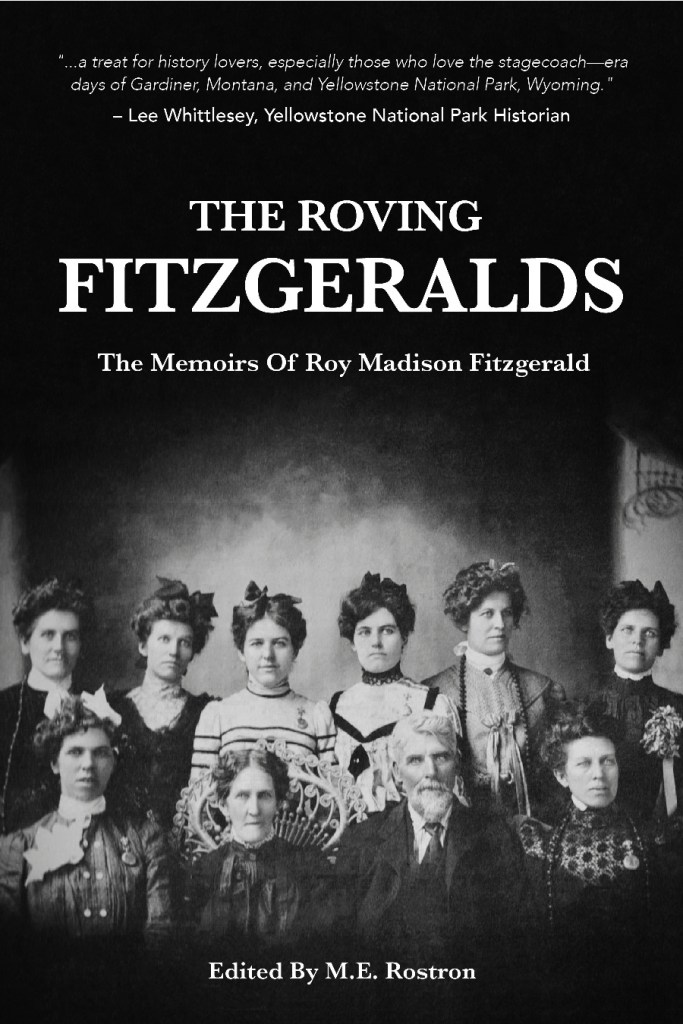
As I walked my mind wandered—one of the reasons I’ve always loved to walk. While editing my great grandfather’s memoirs, “The Roving Fitzgeralds,” I thought about what it must have been like before the automobile, when people walked or rode great distances. I’ve read that most wagon trains heading west did well to average 20 miles a day. Now I don’t have to imagine—I know what it was like!

Still, next time I’m down in that area I will be far more likely to stay away from mud puddles! On the other hand, I hope to get in a few longer hikes in the future, while I’m still able. There is much to be said in favor of traveling on foot. Even a bicycle can be too fast to fully appreciate your surroundings.

The Last Chance Ranch, at about 6,200 ft in the Sheldon Wildlife Refuge.

A park building seasonal ranger post. Another legacy of the WPA projects of the 1930s.

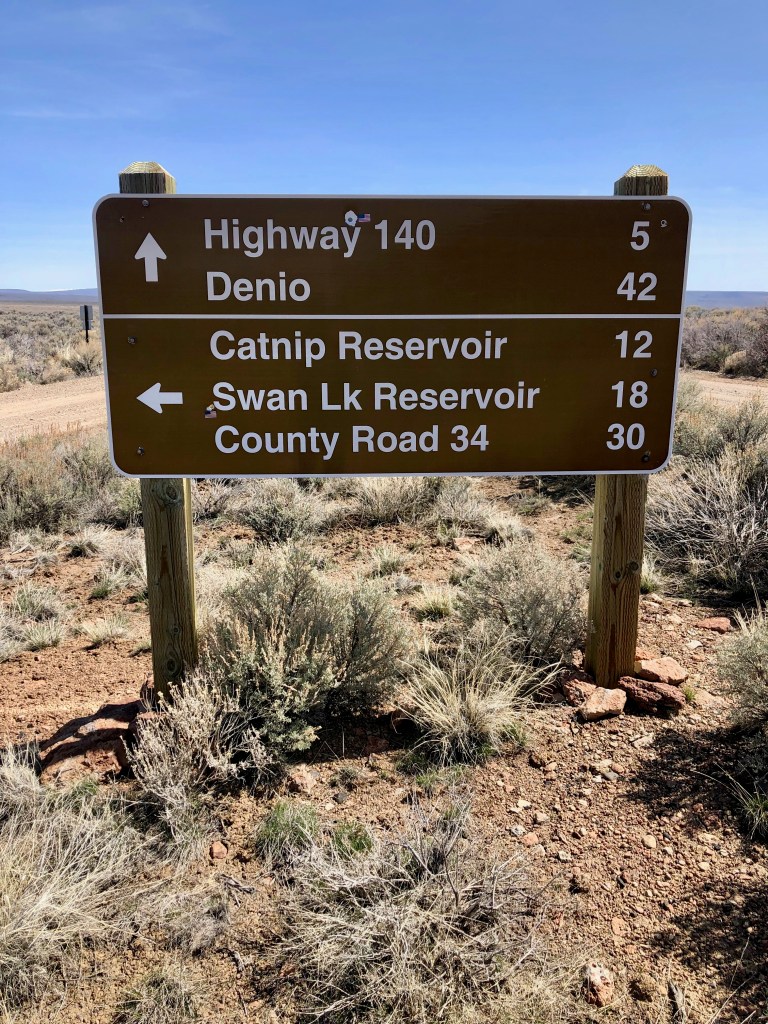
It was great to get to this sign. Only five miles to go!

Another Much Sadder Birthday

My birthday this year coincided with most of the results of the midterms coming in. The outcome is better than I had hoped, giving me some cause for optimism. Although I have much to be grateful for this year, my youngest daughter’s absence made the occasion bittersweet. Any joy I feel is tempered with sadness now. In my last blog I was brimming with energy and confidence, excited about publishing my third book and looking forward to an author event March 24 at Village Books in Bellingham. My daughter, Haley, died that very morning of a fentanyl overdose. My wife and I spent the day at the hospital, where they managed to get her heart beating, but she did not regain consciousness.

I look back on my post from last year, “Thoughts On Becoming 70,” and I don’t know whether to laugh or cry. Such hubris. The wise old man—ha! Spry old guy with all his plans and projects—ha-ha! Grief can lay us low, I know. I had an urge to delete that post after reading it again, but I’ll leave it up, as an example of how the universe will give us a reality check.

But life goes on for the living, and the question is always how best to spend our time, and how to find some meaning in our remaining days. Some of us are fortunate. Many millions must use every available hour just to provide for their necessities. Though not by any means well-off by “Western” standards, I have the luxury of not having to scramble every waking hour to survive—and, for the moment, time and health to pursue my writing and musical projects. What else can I do? Those who know me understand I am compelled to such activity. The only way I know how to deal with grief is to stay busy. So I trudge on, sadder and perhaps no wiser, but certainly more appreciative of my family and friends, and far more empathetic with those parents who have outlived their children—the most desolate and heartbreaking grief of all.

One bright spot was the return to performing this summer in Lemon Creek. The time I spend rehearsing and performing with my daughter, Lesley, is more precious than ever. All our performances were out of doors, and the weather cooperated. I put up a few photos at the Lemon Creek page here.

I had to take a break from writing for a few months, but I’m back at it again. I’m working on a sequel to “Cape Decision,” and I’ve got a couple of other books in progress. But I don’t take anything for granted. We’ll see what transpires.

Author Event Today

I have an author event today (Thursday, March 24, 2022) at Village Books in Bellingham. I’ll speak and answer questions about all three of my books, with a focus on “The Roving Fitzgeralds,” and “The Kabul Conscript,” my two latest, both published during the pandemic. I’ll also show some photos I took while a Peace Corps Trainee in Afghanistan in 1973, the summer of the coup by General Daoud. That experience inspired my novel, “The Kabul Conscript.” https://www.facebook.com/events/190215556564787

Writers Can’t Tell What Readers Will Like Best

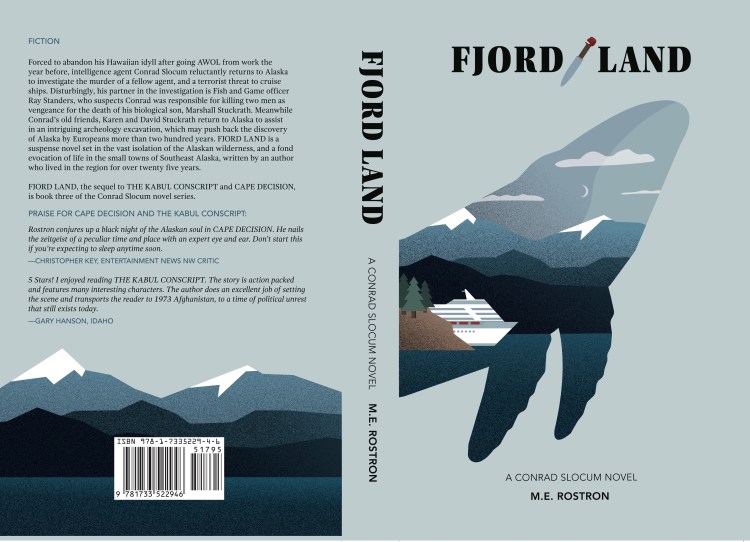
It’s probably true that a writer is the person least likely to understand the preferences of his or her readers. That is certainly the case with my three novels, “Cape Decision,” “The Kabul Conscript,” and “Fjord Land.”

Of the three, “Cape Decision” continues to be the best seller, which somewhat mystifies me. This in spite of the fact that Afghanistan, the setting of “The Kabul Conscript” is much more in the news and public consciousness than Alaska.

I conceived the idea of Cape Decision and The Kabul Conscript at the same time, with the goal of writing about the main characters (Conrad, David, & Karen) in their youth and in middle age. The Kabul Conscript is a sort of prequel to Cape Decision, since it is set nearly thirty years earlier, although the books may be read in any order.

Those I know of who have read the series seem about even in preferring one book over the other, and I can find no pattern, aside from whether they have visited either region. Certainly most Alaskan readers, or those who have visited that state have a preference for Cape Decision, and the few who have traveled in Central Asia like the Afghan story best. But not in every case. Several readers who live in Alaska, or used to live there have told me they preferred The Kabul Conscript.

While I was writing the books I always thought the Afghan novel would be the most popular, not just because of the setting, but because it is in most ways an easier read, with a more straight forward plot. Although all the novels portray strong emotions and violent acts, in many ways The Kabul Conscript is a lighter read—intentional on my part, as one of my goals was to illustrate the differences in the way youth and middle age live in the world, and how people can change over time. Life gets more complicated as we age, so Cape Decision is a more complex and challenging read—or perhaps I just think of it that way, as it was harder to write!

This of course is all speculation on my part. Generally it seems artists can seldom predict which of their works will resonate best with the public. I guess such evaluation is best left to the readers and critics.

Thoughts On Becoming 70

My father lived to be 59, and mother 39. Attaining the age of 70 isn’t something I ever imagined, yet here I am.

At seventy I can no longer pretend I am “middle-aged”—let alone young. No, seventy is not the new forty or fifty, no matter what the wishful thinkers and health pundits may say. You won’t put off the reality of aging by taking lots of vitamins, exercising, or not eating meat. Sure, you can generally live longer or at least better by controlling your weight, getting outside as much as possible, not eating all kinds of junk food, or drinking yourself into stupor every day. Still, I know plenty of drunks, couch potatoes, and garbage-guts who have lived long lives. Some of it is your genetic inheritance, and much just luck. Anyone can slip on a banana peel, get in a car wreck, get exposed to toxins, or just get some random mutation that kills them quickly or slowly at a young age.

I discovered some interesting things in my sixties. The most amazing revelation was how mentally flexible we humans are, and how much we can still learn as we age. I don’t memorize songs as fast as I did in my thirties or forties, but I’m still improving as a musician. When the pandemic started I set for myself the pleasant challenge of learning to play the “standards” and jazz tunes. My entire adult life I have played rock and pop music professionally, and I’m reasonably competent at that. But I had never learned to play songs by composers like Rogers, Porter, Gershwin, and the other greats of an earlier era. Amazingly, after a year and a half of woodshedding, I find I can play those songs, though I certainly will never play like Barney Kessel or Joe Pass!

In my fifties and sixties I wrote two musical theatre pieces, a fair number of songs, published two novels, and edited and published my great grandfather’s memoirs. By comparison, my creative life was not nearly so populated in my youth. In my sixties, after living my whole life in the Northwest—Alaska, Washington, Oregon—all wet, cool climates, I discovered an intense love of the desert. Now I take every opportunity to ramble through the “empty” spaces of Eastern Oregon and Nevada. In my late sixties my granddaughter was born. Perhaps the daily interaction with her, though at times trying, helps keep my brain, if not my body more supple!

In my thirties, forties, and fifties, while my wife and I raised a family and worked, I had the energy to build and remodel our houses; build a wooden sailboat; perform in rock bands; design and operate a recording studio; run long distances three or four evenings a week; and participate in community service activities. My family, music, sailing, construction and cabinet-making occupied much of my time. Writing, literature, and studying history were important even then, but now I have more time for the arts, reading, road trips, and just daydreaming—one of great benefits of retiring from the workaday grind, if you can manage it.

Now seventy, I hope to continue the learning process as long as I can. The world is full of wonders. Perhaps the most profound realization of my “mature years” has been the substantiation and confirmation, decade after decade of the knowledge that it is futile and a waste of time and energy to look to the so-called holy books, religion, the words of preachers, or superstition for inspiration or truth with a capital “T.” I was fortunate to understand this at an early age, after an intense study of mythology, history, anthropology, and some experience with psychedelic plants. This world and what we can see, hear, and feel is more than sufficient. Rereading “Desert Solitaire” again after so many years, I find Edward Abbey summarizes my attitude perfectly: “For my own part I am pleased enough with surfaces—in fact they alone seem to me to be of much importance. Such things for example as the grasp of a child’s hand in your own, the flavor of an apple, the embrace of a friend or lover, the silk of a girl’s thigh, the sunlight on rock and leaves, the feel of music, the bark of a tree, the abrasion of granite and sand, the plunge of clear water into a pool, the face of the wind—what else is there? What else do we need?”

For the future, if I survive and am up to it, I hope to accomplish a bit more artistically. I have several more book projects either in process or in mind; including a sequel to “Cape Decision,” a science fiction story collection, perhaps a book about building my wooden sailboat in Alaska, and a children’s story. Of course I will perform professionally as long as I am capable of it, and continue this musical journey as long as I can—and yes, those desert places still beckon…

The road goes on.