Since moving to Birch Bay, WA ten years ago I’ve seen the European mantis (Mantis religiosa) on only two occasions. The first time was in 2021. While walking in an undeveloped area near my home I observed a female capture and eat a a large cross orb weaver spider. Her strike was lightening fast. She began by eating the legs, then consumed the body. See my video and photo below.
Both sightings were in August during a run of dry weather. I have seen these mantids several times east of the Cascade Range, where they are much more abundant. Once, at a service station in Bridgeport, WA there were hundreds of the insects covering the pumps, cars, building, and on the ground. It was impossible to avoid running over them. The pavement was slippery with their squashed bodies.
This is the first time I have observed them in our yard. My wife and I found two males the same day, one on the screen door of my studio, and another in a flower planter box. We captured them in a jar and carefully placed them in the garden. Perhaps they will eat a few pests, though they eat beneficial insects too. Larger females will sometimes even capture and consume hummingbirds.
Mantids are my favorite insects, along with dragonflies. My fascination with insects and spiders dates back to my early childhood. The first stories I created were fantasies of a world where I was the size of an insect. My friends and I fought epic battles using needles for swords, and we sailed the creeks and ponds in boats we fashioned from walnut shells. Here are some of my lyrics to “Without Compare,” a nostalgic psychedelic song I recorded a few years ago with Salvadore Dali Llama.
"Every lily pad a foreign shore, Insect conquistadors explore. We set sail in walnut shells, With matchstick masts And paper sails.
The branches of the trees held up the sky. The ants, the bees, the birds, and dragonflies. A world revealed is yours and mine to share. A summer day without compare."
“Without Compare,” Salvadore Dali Llama. Vocals; Jim Nelson, Mike Rostron. Drums; Jon Grover. Bass; Doug Hyldahl. Guitars; Mike Rostron, Jim Nelson.
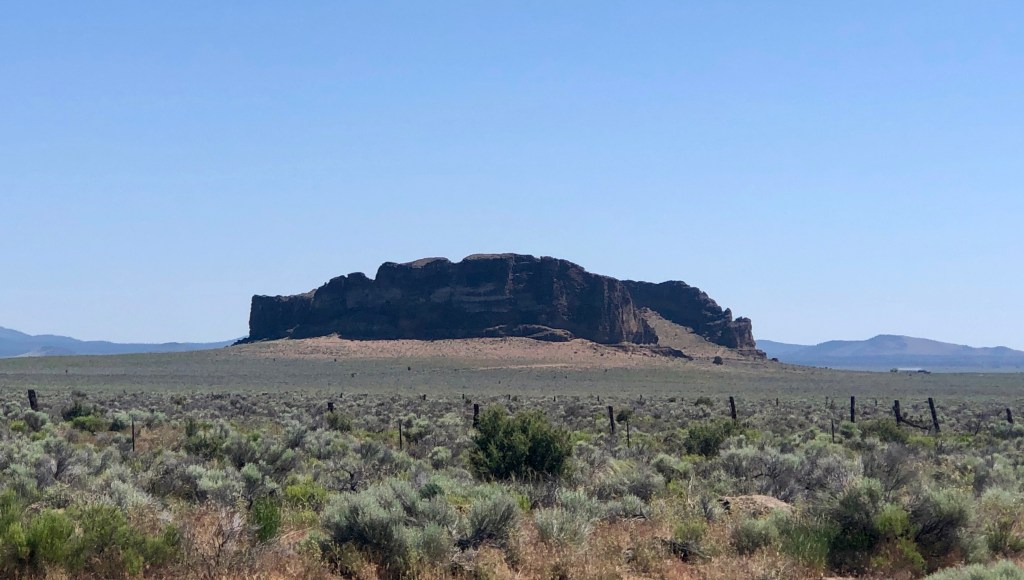
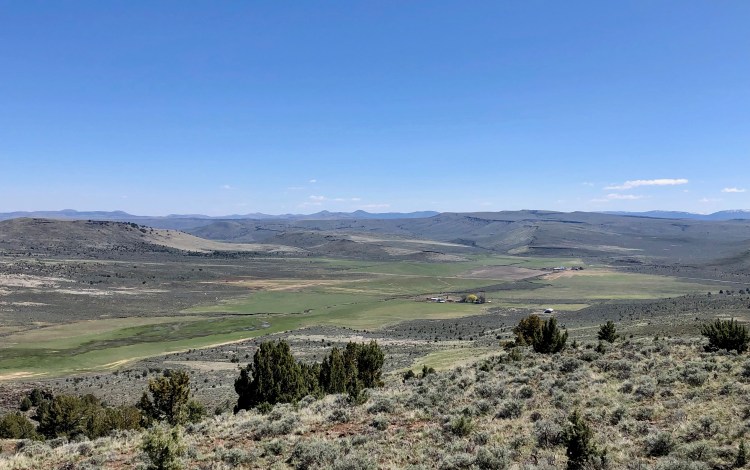
Fort Rock in southern Oregon, a favorite place with a fascinating geology and history.
I recently returned from more travels east of the Cascade Mountains, through eastern Washington, Oregon, and northern Nevada. My friend, Eric accompanied me in his camper.
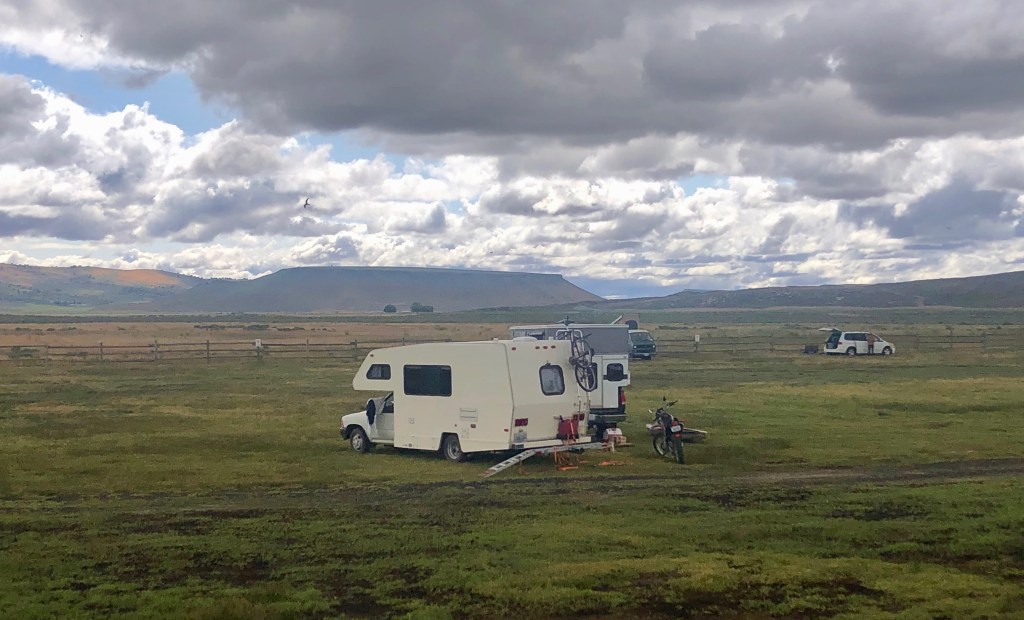
Our camp in the open field at Crane Hot Springs, Oregon.Hart Mountain National Antelope Refuge, Oregon.
I took along my dual sport Yamaha XT 250 motorcycle.
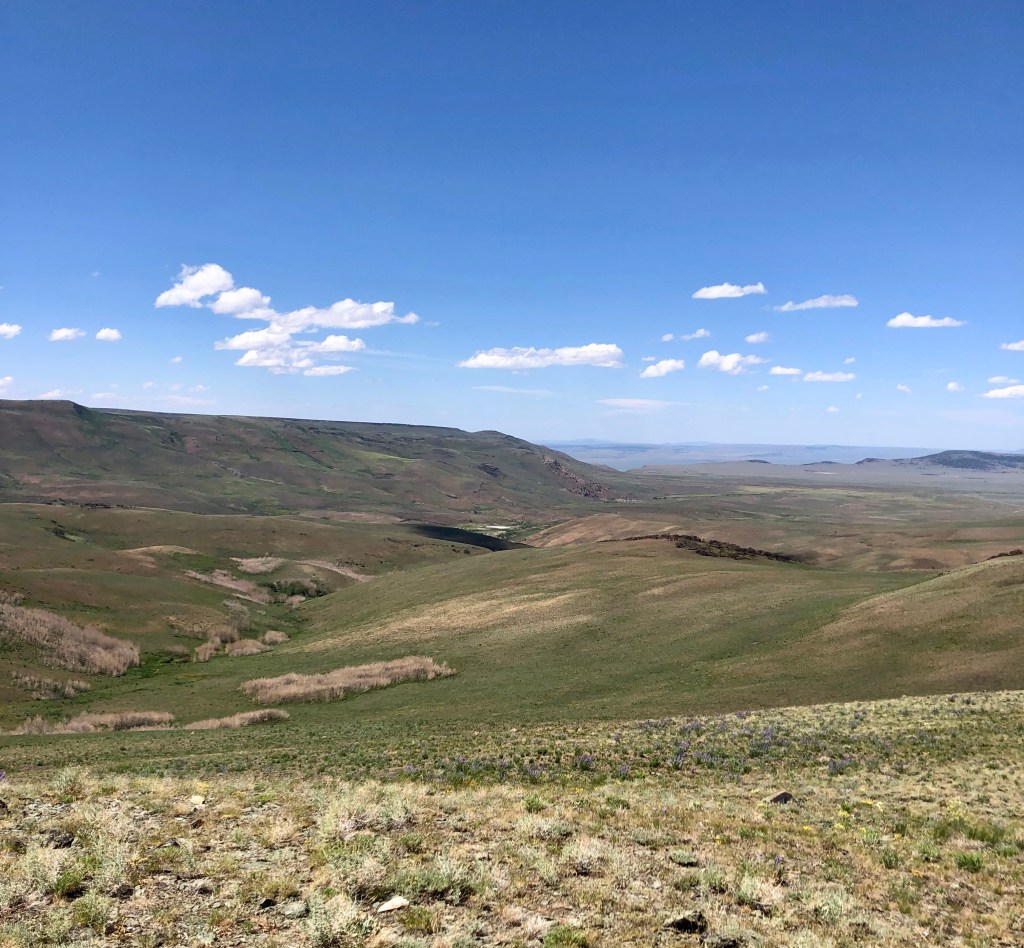
The Yamaha and “Kermit” (my 1990 Toyota minnie-winnie), both got a pretty good workout.A back road in the antelope refuge.
Over the last several years of traveling the high deserts and Great Basin I’ve made some interesting observations.
Observation 1: Most small towns have better phone service than where I live.
I live in Birch Bay, WA, population about 12,000. The place has no post office, schools, or shopping centers. I have at most two bars on my cell phone at home. To make phone calls I must often walk up to the nearby golf course or the millionaire’s subdivision adjacent to ours, to get adequate service. I use Verizon, but the same was true with my previous service provider.
Below is just a partial list of towns in Eastern Oregon and Washington with a population under 600 I have visited in my travels, which have four or five bars service. I’ll leave you to draw your own conclusions about how progressive Whatcom County is with respect to communication infrastructure.
Virtually every community I have visited east of the Cascades in Washington and Oregon has better cell phone and internet service than the Birch Bay/Blaine region.
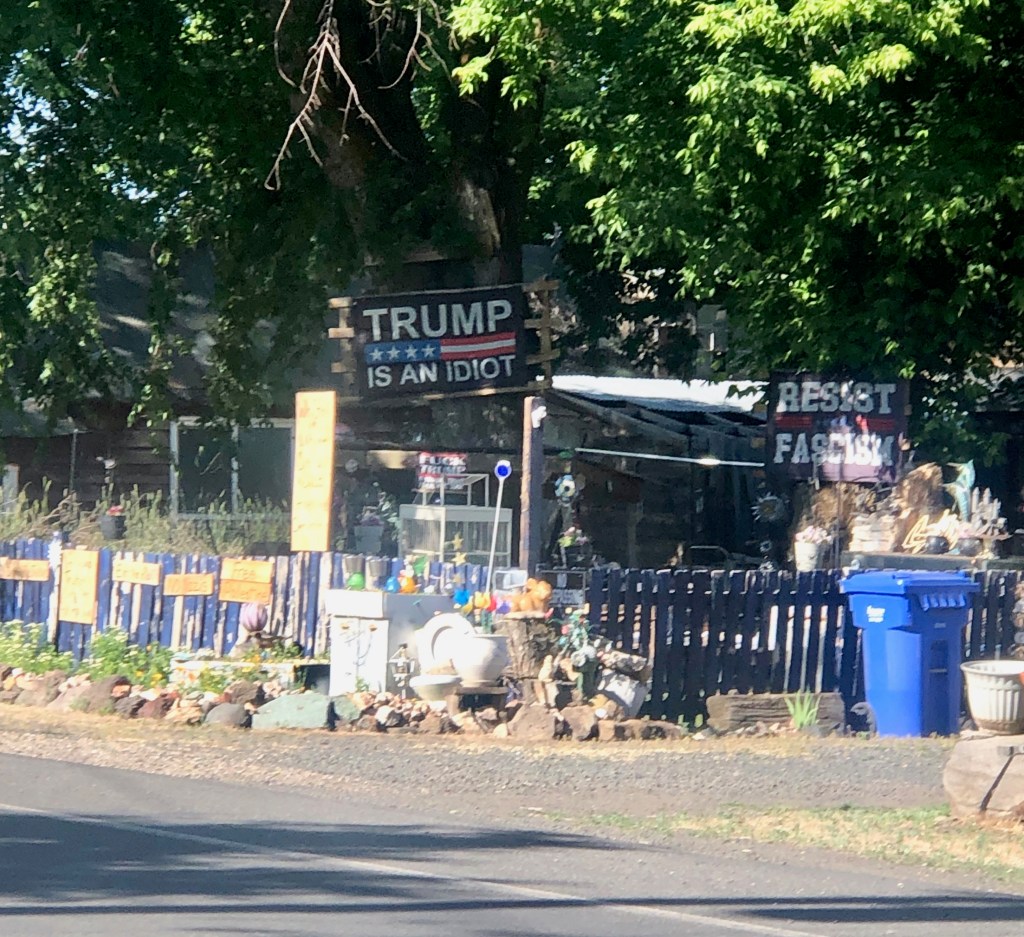
Signs in yard in Lakeview, Oregon.
Observation 2: It’s common knowledge that the majority of folks east of the Cascades tend to vote Republican, and many are Trump cultists. But there are many exceptions, and the true picture is more nuanced.
Bend and Pullman are obvious exceptions, but even in some of the smaller towns the majority do not vote Republican, or the voting is very close. Parts of Eastern Washington are more progressive than the I-5 corridor in some ways. You will see road signs in both Spanish and English in some regions of Eastern Washington, and many schools offer Spanish language courses. Here in the Blaine school district, supposedly progressive, Spanish is not even offered until high school—inexcusable!
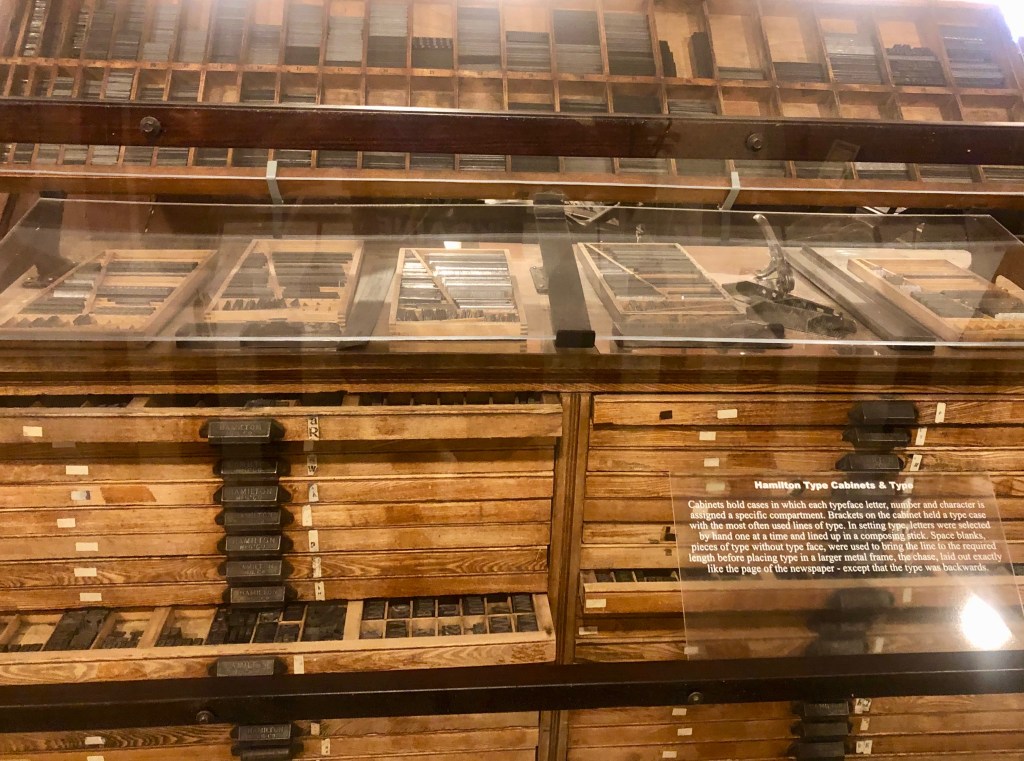
Movable type cabinets display, Moro, Oregon.
Observation 3: Many of the small towns have excellent museums that are well worth a stop.
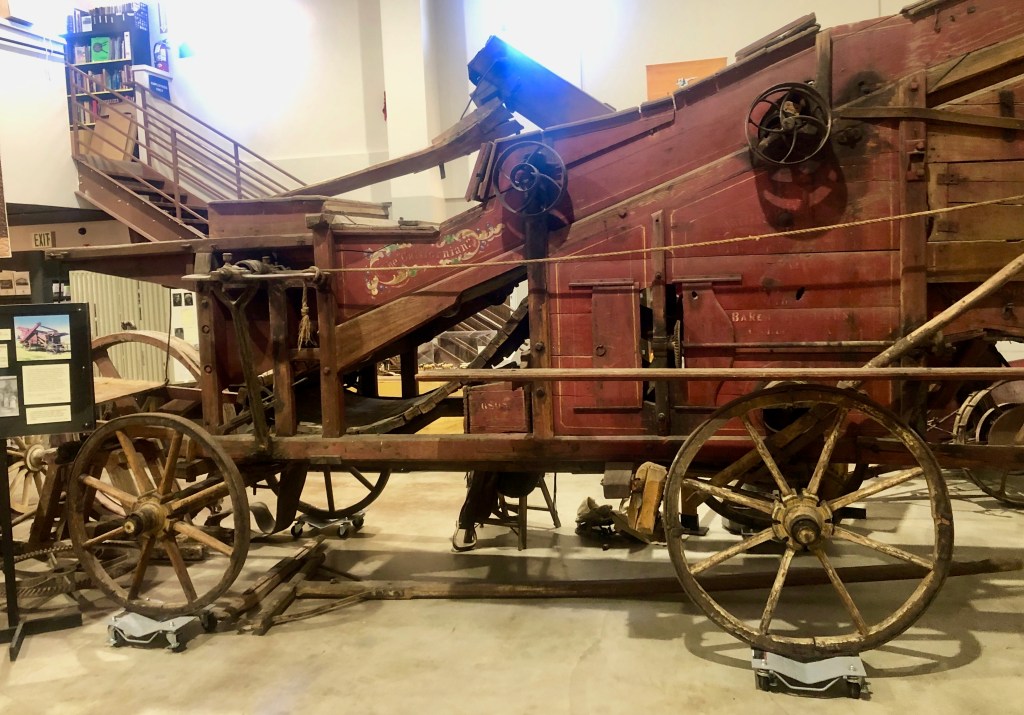
Old combine Moro, Oregon museum.
If you’re driving through Oregon on Highway 97 and have some spare time, check out the museum in Moro, just a few miles south of the Columbia River crossing. The old printing press display is world class. Many of the small towns have good museums with a wealth of information on their history.
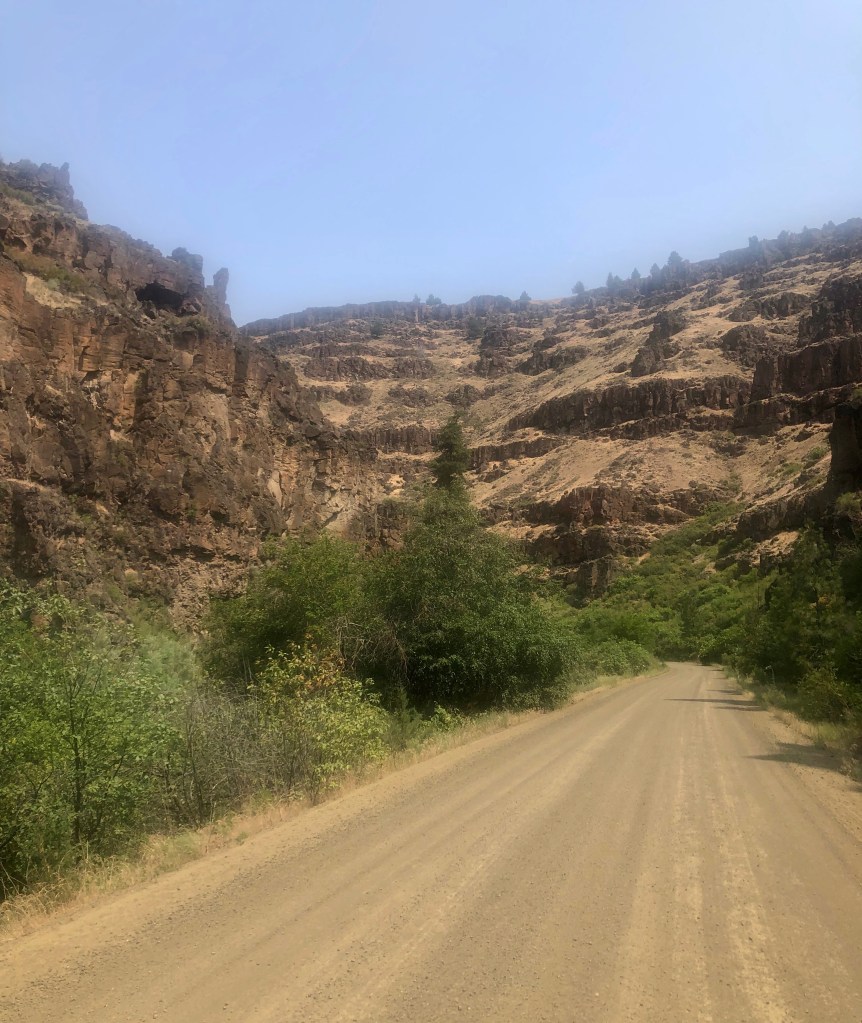
I almost always pass through John Day River country on my return trip. This time I followed the south fork of the John Day. It was slow driving along a mostly decent gravel road. Besides Eric, following at a good distance behind me to avoid my dust, I only encountered a couple of other vehicles on this section of the road.
Road following the South Fork of the John Day River, Oregon.
Once again we camped along the John Day before heading north to the traffic and congestion of Washington. It’s always hard to come back to the I-5 corridor after these adventures. So instead of immediately heading up I-90, the fastest route home, I spent a couple days in eastern Washington enjoying the mid 80s temperatures, before heading home via Highway 20.
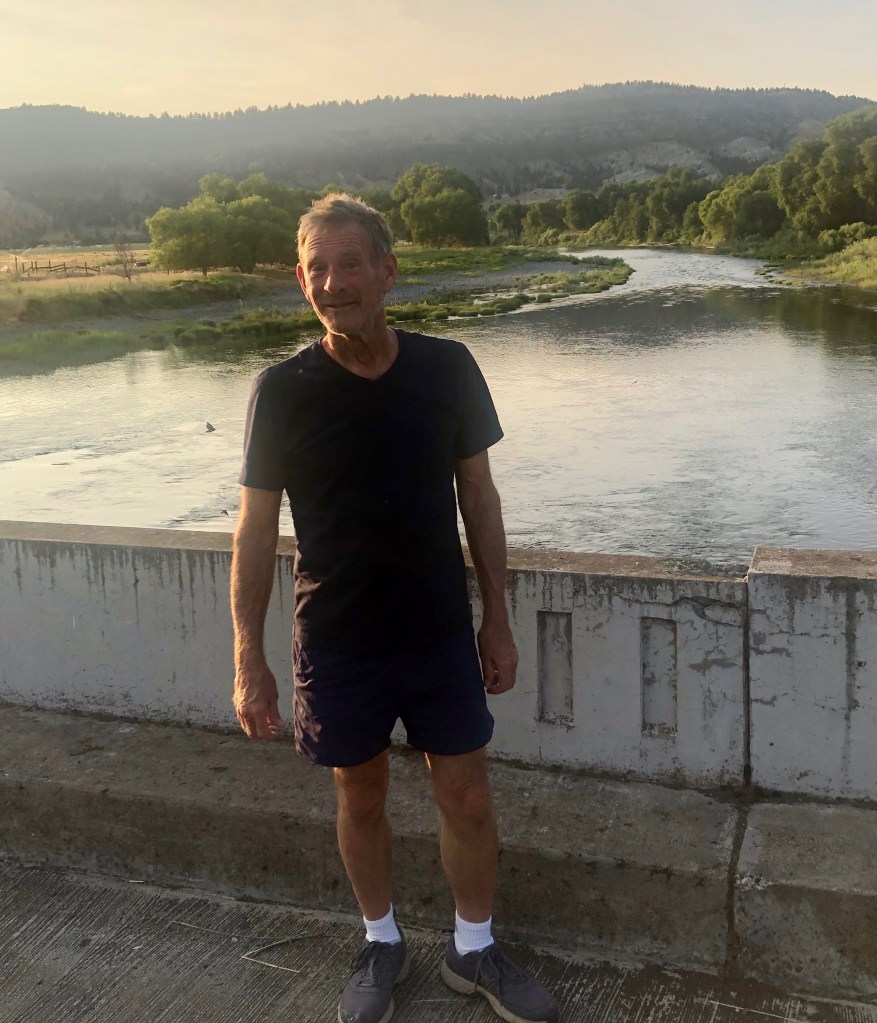
Standing on a bridge over the John Day River, Spray, Oregon.
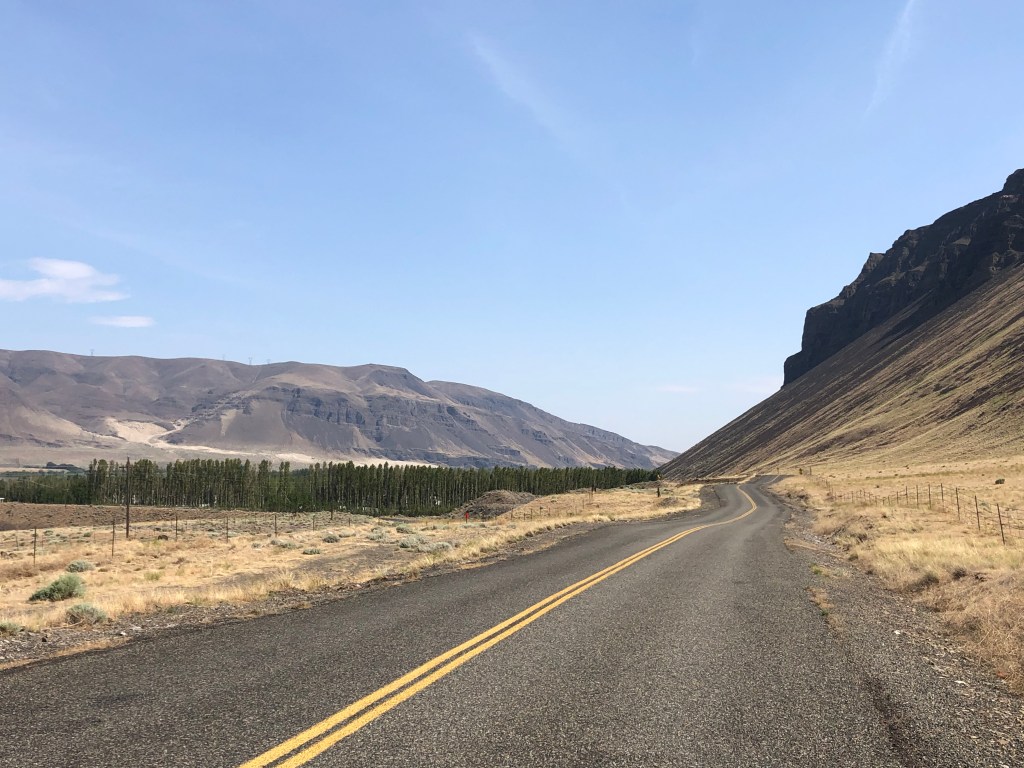
While camping near Vantage, Washington, I took a motorcycle ride down the west side of the Columbia River, past the Wanapum Dam and the old railroad bridge (now part of the Palouse to Cascades State Park Trail, formerly the John Wayne Pioneer Trail), and through the imposing Sentinel Gap. There were no boats nearby on the river or people on the beach that warm Wednesday afternoon, so I cooled off with a skinny dip in the Columbia River.
South of Vantage. Orchards along Columba, and the Sentinel Gap ahead.Wanapum Dam and I-90 bridge in the distance.The old iron railroad bridge, now part of the Palouse to Cascades State Park Trail.It was a nice place for a skinny dip!
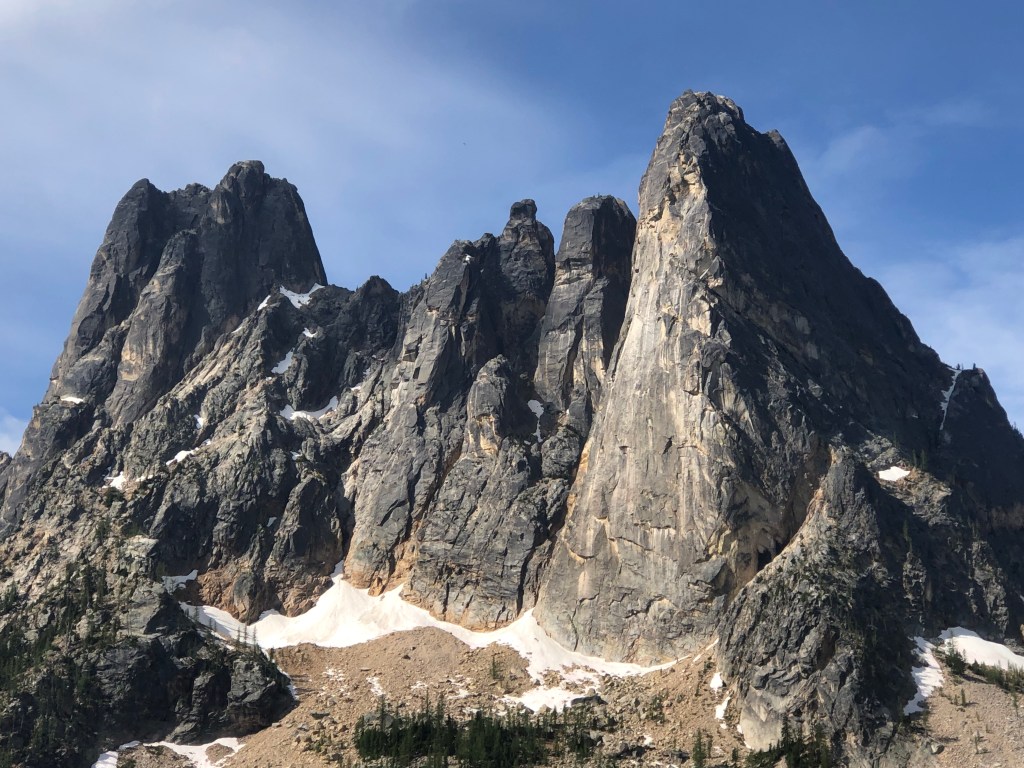
Liberty Bell and associated peaks at the top of the pass on Highway 20. Always a great stop.
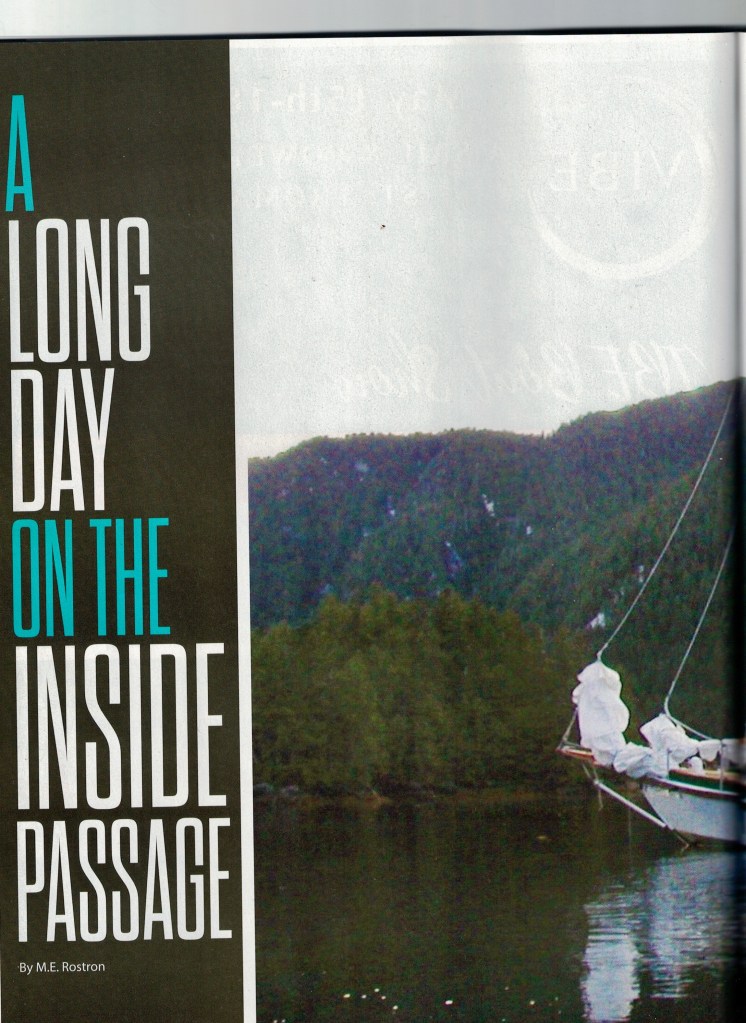
A Long Day On The Inside PassageFeature article May/June Latitudes & Attitudes
My article, “A Long Day On The Inside Passage” has been published on page 82 in the May/June addition of Latitudes & Attitudes magazine, which is now out on the newsstands. The publication did a nice job with the layout, using photos I sent along with the article. They also included links to this website and my latest novel. These sorts of features don’t pay much, but the publicity is always welcome. Those who have read my 2019 novel, “Cape Decision” will recognize the inspiration for one of the incidents in that book. Latitudes & Attitudes is in its 27th year of publication, and the most popular print magazine for sailors, cruisers, and boaters. Their print version comes out six times a year. They also produce an online version.
Several times each year I head down to the Oregon and Nevada high desert regions for a break from the wet weather and the dense population on the west side of the Cascade range. I’ve spent most of my life west of the Cascades in Washington, Oregon, and Alaska, but I’ve grown to love the dryer weather, open vistas, darker night skies of the Great Basin region. I recently got back from my first trip of 2025.
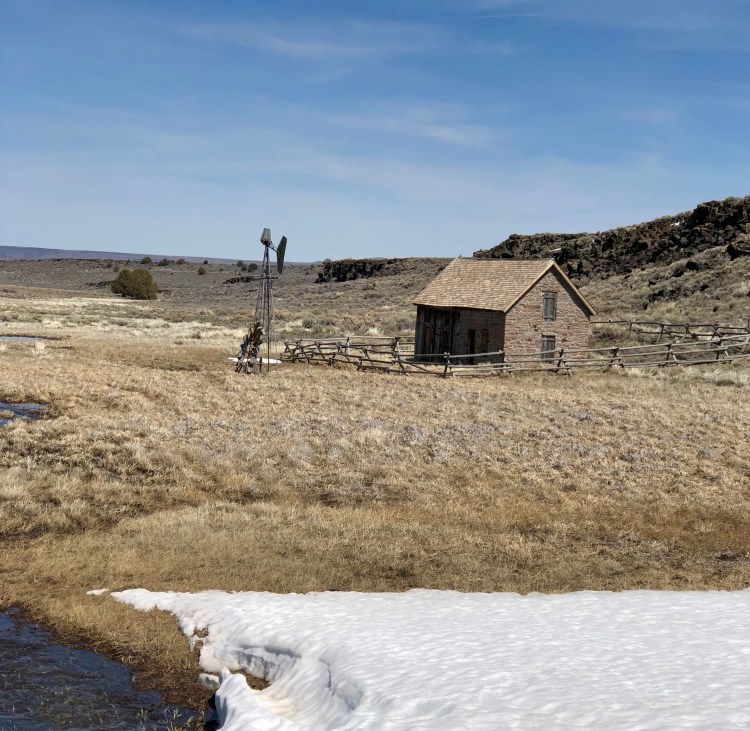
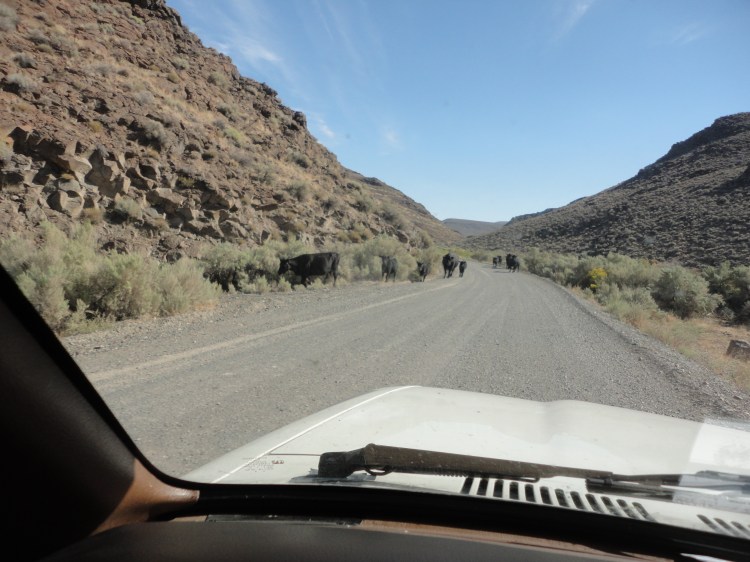
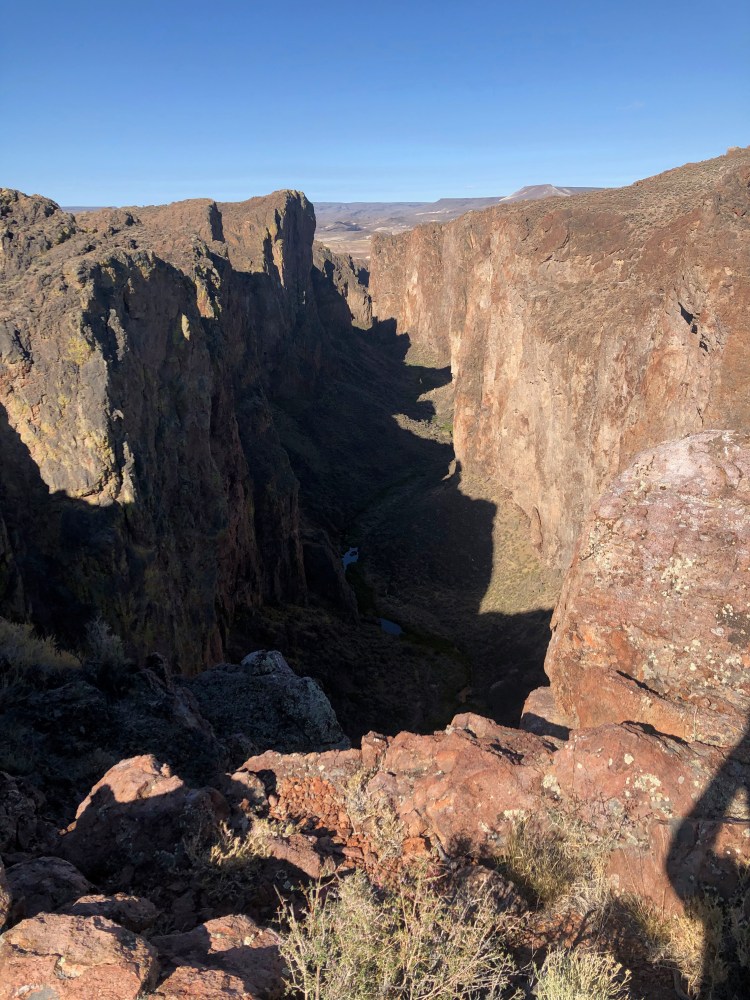
Last Chance Ranch, Sheldon National Wildlife RefugeChicken coop ruins at IXL ranch, Nevada.Cattle in the road, Whitehorse Ranch, Oregon.Gorge, Sheldon National Wildlife Refuge.
I travel in my 1990 Micro-Winnie with a couple of old friends or by myself, and occasionally with my family. The goal is to always to get off of the I-5 corridor as quickly as possible, where traffic is generally heavy, and it’s often rainy. I generally spend the first night somewhere along the Columbia River. This spring one of my favorite campgrounds is closed, due to Trump’s staff and budget cuts. A park ranger informed me she was not sure when or if they would open again this year.
My granddaughter above the Columbia River.
Our wisest and most statesman-like presidents set aside land for the use of the citizens, and to preserve the rapidly vanishing wild areas. The short-sided ones privatize those regions for corporate profit.
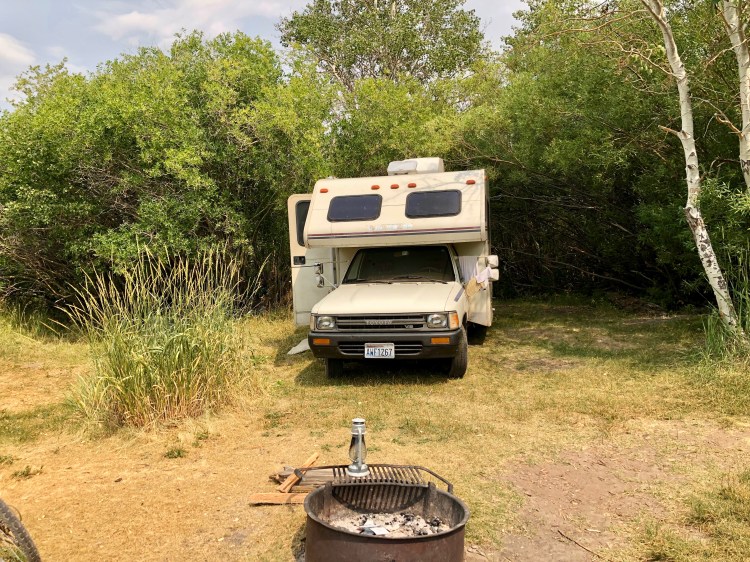
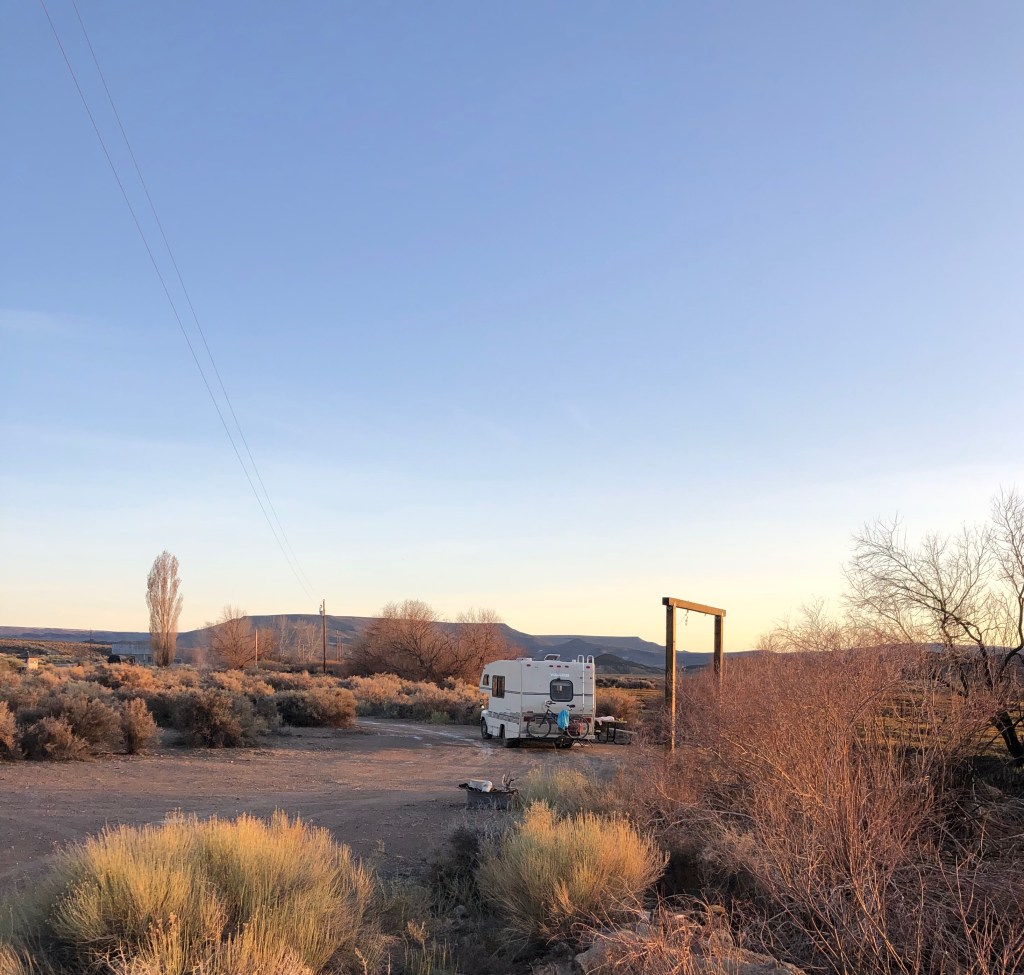
“Kermit” at campground in Hart Mt. Antelope Refuge
This year I’m taking along a dual sport motorcycle on some trips. I plan to get deeper into some of the places where “Kermit” shouldn’t go.
Yamaha loaded on “Kermit.”
Many people live their whole lives without ever seeing the Milky Way, or more than a few hundred stars. I’m fortunate to live a day’s drive away from some of the darkest night skies in the country, where the dome overhead is filled with the light from millions of stars. The sunrises and sunsets are nice too!
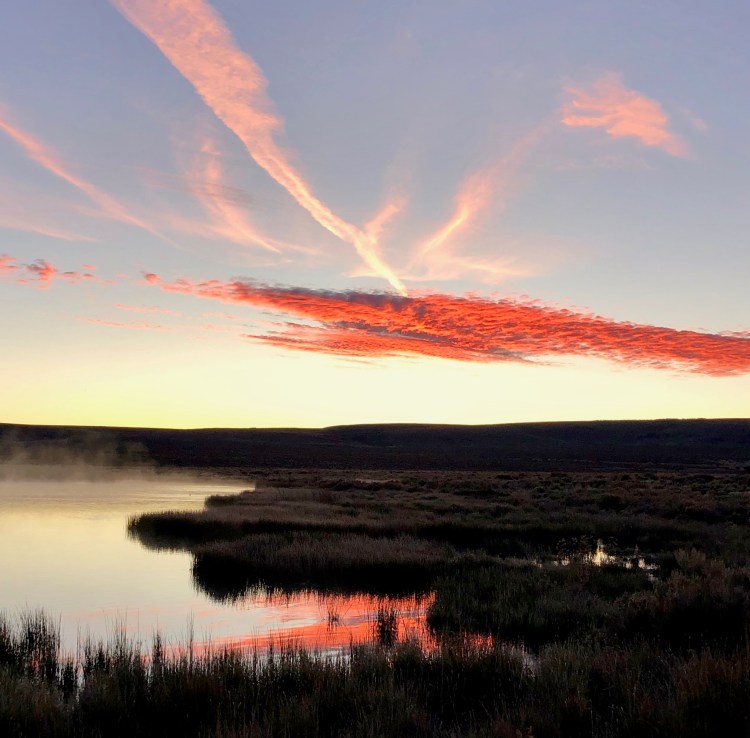
Sunrise in the Sheldon Wildlife Refuge.
ReplyForwardAdd reaction
But it’s not all camping in state and national parks, or on BLM land or other more remote locations. Now and then I stop into a local watering hole to have a drink with the locals, and other travelers. Who knows, maybe I’ll see you out there this summer!
Mike at unique bar above the John Day river.An old bar in the Ruby Mts., Nevada
“Don’t follow leaders — watch the parking meters.” Bob Dylan
“… people like us (are gonna make it because) we don’t want freedom, we don’t want justice, we just want someone to love.” Talking Heads
Americans have never had a real democracy, and most don’t want one. The nation was founded by a few wealthy white men. Women, Native Americans, and slaves could not vote. At first that privilege was limited to white male property owners. Later they extended the vote to all white male citizens, but even black men could legally vote years before women of any color.
Most of the founding fathers never intended to create a true democracy. They didn’t like paying taxes to the king of England. They wanted to create a government of checks and balances where no single member of their private, wealthy, land holding buddies could get too much power over the rest of them. They didn’t want a king or a dictator, but they also did not intend to enfranchise all citizens.
These days many Americans, perhaps even a majority, would seem to prefer a dictatorship or strong man form of government. A big percentage of our citizens idolize the wealthy. People (mostly white males) who happen to have inherited wealth, or have a talent for accumulating it are generally respected more than scientists, teachers, generals, artists, movie stars, or even sports heroes.
We know the above to be true because it would be so easy, especially with our modern communications technology, to make our government more democratic. Below is a list of of obvious changes which would accomplish that, but will probably never take place in this country.
1. Require all citizens 18 and over to vote. (Penalties or fines for not voting, as in some more democratic countries.)
2. All voting by mail or online. (No old or infirm citizens waiting in lines in the cold at polling places, etc.)
3. Make federal and state election dates mandatory paid holidays (In an actual democracy voting would be a celebration, not a hardship.)
4. Abolish electoral college (One person, one vote.)
5. Establish strict limits on corporate and single donor election spending.
That fact that these obvious changes are rarely discussed or even brought up in congress or the media, is an indication that the oligarchs don’t want everyone to vote, and much of the public doesn’t really want the responsibility of participating in a more democratic form of government.