In 2020 my sister found a box of papers that had been in storage for over forty years. The box contained a number of steno notebooks filled with the writings of our great grandfather, Roy Fitzgerald. Roy had died in 1972, we thought before he had completed his memoirs, which he had hoped to publish. In fact he had finished, and was in the process of editing them when he died in his late eighties.
I spent most of 2020 transcribing the hand written notebooks, then sent the manuscript to Lee Whittlesey, the long time historian of Yellowstone Park, who had published a number of books on Montana and Yellowstone Park history. He encouraged me to get the book published, and even provided a blurb.
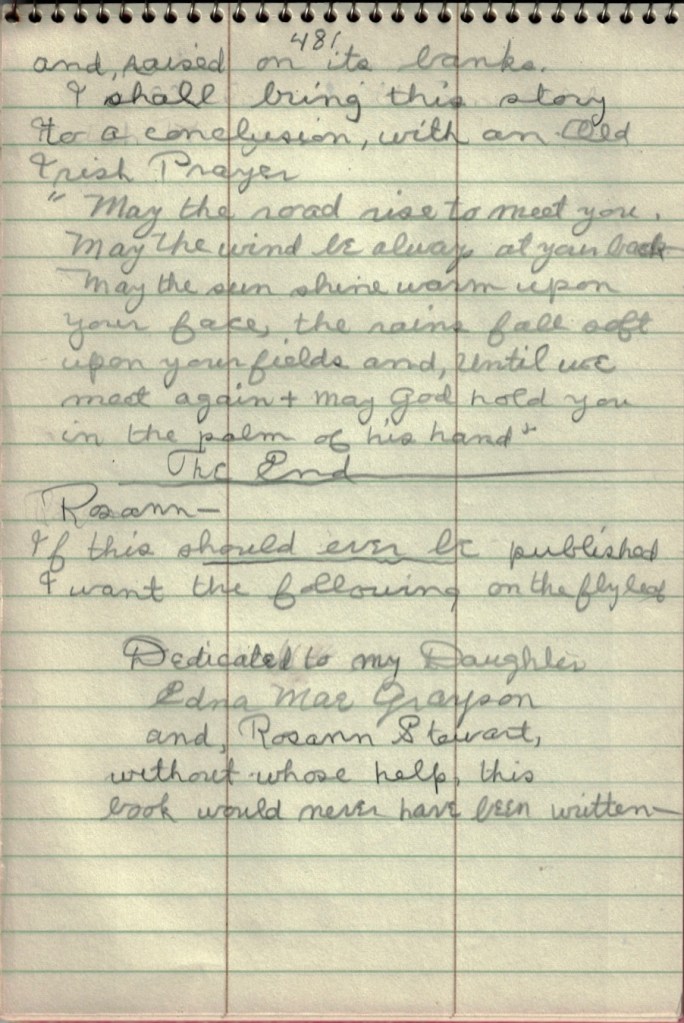
The last page from the steno notebooks. Roy wrote on both sides in pencil, in a very legible cursive.
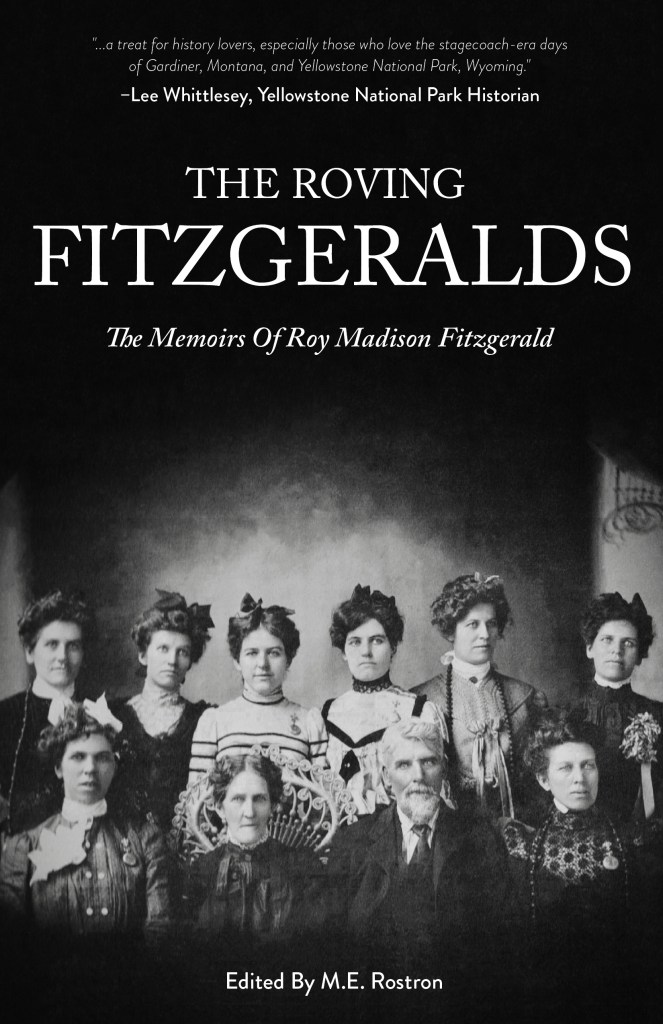
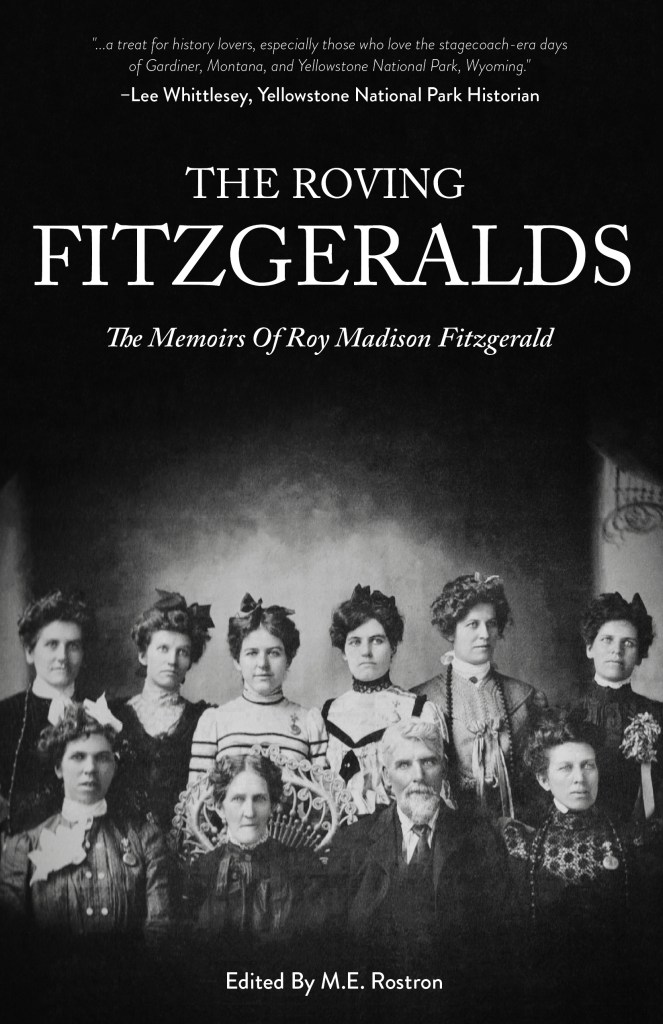
“This book will likely be a treat for history lovers, especially those who love the stagecoach-era days of Gardiner, Montana, and Yellowstone Park, Wyoming. The Fitzgeralds were some of Gardiner’s earliest settlers, and the book fills in some important details about those settlers and their times that we have not had before” —Lee Whittlesey, Former Yellowstone National Park historian, author of “Gateway to Yellowstone,” and other books of Montana history.
Village Books will ship anywhere in USA. https://villagebooks.com/item/jauVaWLtfrvM4KO9RUCOiw
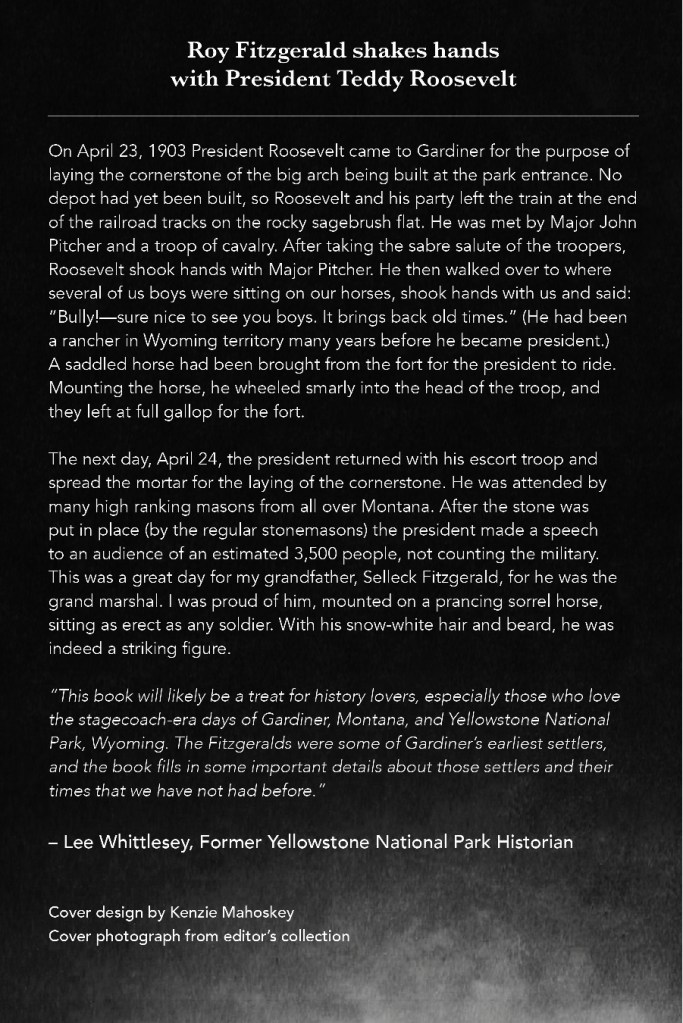
From the back cover:
On April 23, 1903 President Roosevelt came to Gardiner for the purpose of laying the cornerstone of the big arch being built at the park entrance. No depot had yet been built, so Roosevelt and his party left the train at the end of the railroad tracks on the rocky sagebrush flat. He was met by Major John Pitcher and a troop of cavalry. After taking the sabre salute of the troopers, Roosevelt shook hands with Major Pitcher. He then walked over to where several of us boys were sitting on our horses, shook hands with us and said: “Bully!—sure nice to see you boys. It brings back old times.” (He had been a rancher in Wyoming territory many years before he became president.) A saddled horse had been brought from the fort for the president to ride. Mounting the horse, he wheeled smartly into the head of the troop, and they left at full gallop for the fort.
The next day, April 24, the president returned with his escort troop and spread the mortar for the laying of the cornerstone. He was attended by many high ranking masons from all over Montana. After the stone was put in place (by the regular stonemasons) the president made a speech to an audience of an estimated 3,500 people, not counting the military. This was a great day for my grandfather, Selleck Fitzgerald, for he was the grand marshal. I was proud of him, mounted on a prancing sorrel horse, sitting as erect as any soldier. With his snow-white hair and beard, he was indeed a striking figure.
“The Roving Fitzgeralds,” is in stock at Village Books, Bellingham and Lynden, and available by order, either from Village Books, through the Goodreads, or using paypal, below. “The Roving Fitzgeralds” is not sold through amazon. Please order from your favorite, independent bookstore!
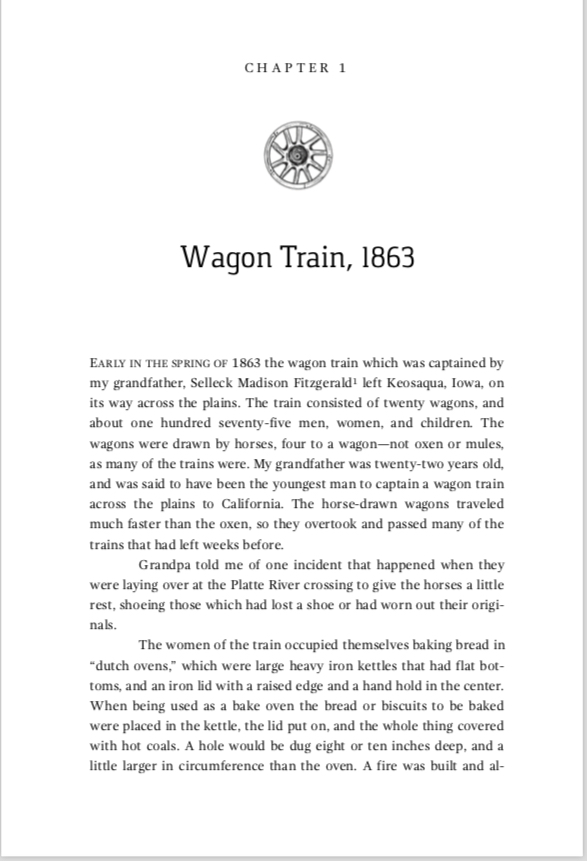
The first page of chapter 1:
 Captain Mike's Log